~If you have fibro, I suggest searching YouTube for Fibromyalgia, ME, CFS, FMS... there are some really amazing videos out there.~
I'm pooped - Emotionally, physically, mentally, spiritually. (breaktime-back!) I'm trying to stay positive, but the pain is worse than ever. Yesterday my teeth felt like they were burrowing needles into my gums.. the pain was so intense and so unrelenting, I hate this disease with a passion. Today I can't sit up for more than 5 minutes without my back feeling like it's been beaten for a few hours. My eyes are blurring all the time, sometimes I can't see the computer screen without leaning forward and squinting hard. Sometimes I hallucinate so much I just close my eyes and lay in bed, watching the images painted on the insides of my eyelids. The anxiety is the worst it's been in years. I'm so scared, so paranoid, so terrified of the future. Feels like I'm always being hunted, stalked, watched, judged, targeted by some unknown that I know is irrational. I am paranoid about everyone, even my family. I know it's stupid, but my brain's nooks and crannies don't seem to. I meditate, but my fatigue gets the best of me and I just pass out for a few minutes. I'm so sleepy. I need good sleep. The first thought in the morning is about the pain that woke me up, screaming to get help - but no one can help. I want to get a massage again, but my pain is too bad. The slightest touch lingers on my skin with a bruising burning pain. I want human touch, but it hurts way too much. Constantly thinking people are out to get me.. worse since I've started to walk outside due to the good weather.. people seem to need to call me fat.. like they can't resist it. OCD? Who knows. The last thought before bed? Please God, let me sleep. Let me get more than an hour, let me be able to get to sleep without self hypnosis and a handful of pills. I don't want to count backwards from 1000 and then back again a good ten or fifteen times before I either drift off into sleep or give up and watch TV while trying to calm my anger down. Insomnia makes me angry. People are always judging.. she's not sick, she's a fat lazy leech on society. She's lying, exaggerating. Why won't she stop complaining? It can't be that bad or she'd off herself.
The shrinks who did my psych eval said I'm not "depressed". Does thinking constantly about how terrified you are about life have a name? Does it have a name when thinking of death makes you smile? One day it'll all be over. One day you'll be free. One day you won't have to hurt, be sick, be judged, be a burden, be a leech. Even if there is no heaven, even if I've hallucinated all my dreams of heaven being real, I'd be free of constant pain.. constant torture. There is no way to make the torturer stop... I can't tell him the truth, there is no ransom, there is no end of the war.. there's only pain till death.
But they'll find a cure... they say. Maybe, and I have so many hours of prayer and hope that one day they'll cure us. They'll cure us instead of laugh and judge.. they'll stop Death from being a comfort, and turn life into a comfort.
I'm being broken down block by block, my personality is fading, my mind is slowly obsessing over how to stop the pain, and I feel more and more like Alice down the rabbit hole - only I'll never reach the bottom. I fall and fall, reality becoming a fable... losing my sight, my hearing sharpens to pain me, every touch painful.. I forget what pleasure feels like.. Hold on, hold on.. don't let go of yourself. I'll never let go. Are these pills making me worse or better?
My life has become simple. Struggle to sleep, deal with pain all day, try not to binge(food), pills pills pills, panic, sadness. Luckily there's also: Family, friends, my Gordon, art, music, short walks when I can, occasional shopping, and Guild Wars.
Will I continue to progressively get worse, as I have over this decade? That thought I try to banish when it arises. I hate being serious. Pain makes you more serious. I wish I could have a holiday.
Chins up, my FMS/CFS/ME friends. One way or another, it'll get better.
Showing posts with label fibro. Show all posts
Showing posts with label fibro. Show all posts
Friday, May 11, 2007

Monday, November 06, 2006
GRAPE AND PILLAGE!
(Huge Update Post)
Bike Ride
 Oh the fun of freedom on three wheels.. Like the ladybug? That's my bell. Today I went on a long (long for me) bike ride by the Ottawa river. I want to get as much bike time as possible before the damnable snow puts a stop to my peddalry. Then I want snowshoes, so I can get wicked photos of beasts at their most winterized. Fluffy. This photo was taken halfway thru my ride.
Weight Loss progress
Yay I lost two pounds this week! Right now I'm doing behavioral conditioning to get me in touch with my non-pill-induced appetite. Harder than it sounds. Although I think this will be The Way to losing weight permanently. I can see myself doing this method every single day of my life and not getting tired of it.. Most diets are a huge pain in the ass.. but this isn't a diet. It's like you're using a computer and you don't know about a core utility program.. like specialized alarms.. this diet-changing method teaches you about the appetite alarm in your stomach... the one which many people (including myself) have learned to ignore. Now I actually FEEL hungry, and can tell the difference between psychological and physical hunger. Huge diff. So now, instead of relying on writing down all calories and all foods - this neat little notification program tells me when to start and stop eating to maintain a proper weight. Nifty. Some people are born knowing where this program is, of course.
Grape and Pill-age
Speaking of pills, I am having a party this weekend with some close friends - and of course I had to run out of painkillers. I have the hardcore twice-a-day controlled release pills, but not the "I NEED RELIEF NOW" pills. I have to stay away from alcohol, my normal method of replacing painkillers.. so basically I'm trying to use my TENS machine more and trying to meditate (I practice Raja Yoga routine, because one fuck up and I'm in big trouble. Emergency clinics don't prescribe Em-Strength painkillers. They prescribe crap like Codeine sometimes, low dose and high itch factor, just like straight Morphine. meditation) as much as possible. I'm paying more attention to my regular HathaOooh but I still like Morphine. Codeine metabolises into Morphine, but for some reason, it doesn't really tickle my fancy. Hurts my tummy more than Morphine. I'm on different pills that I'd rather not broadcast. They are the freedom givers. They free up some RAM for me, which is taken up by randomized pain-to-psyche distraction. A very temporary defrag.. but worth it.
People and Pain
Certain people lower pain... just by talking to them or being around them (etc). Mainly my Mom, my 2 close girlfriends, and a new Manfriend of mine is really quite good at it! - but one cannot rely on others... for a few good reasons... A) they can die B) they can decide they don't want you in their life C) they might get sick of being around you.. hehehe. I don't see my girlfriends as often as I'd like.. and my platonic guy friends.. wink wink.. come on guys, take me out!!!
Doggy and Pain
Of course Gordon helps a lot. Just looking at him and being around him makes me swoon with puppy love!! I groom him, train him, and play with him every day... and in my pain database, which I enter data in daily to track pain and other issues, I refer to my time with him as "PT" - puppy therapy.
Database and Research - Almost reaching the year mark!!
Yup, I have a database for my ails. Right now it's just a shitty spreadsheet, but I'm working on making a better database. I've had it for almost a year, so soon I will be able to work with the data and do something constructive with it. I've already tracked some very important patterns, which I will submit to various research organizations for Fibro, Endo, and CFS. New data, I think, as I am usually up to date on the latest published research in those fields. You can't rely on doctors to help you, Fibrofolks, Endofolks, and CFSfolks.. nope. Get researching, get reading.. I know it's hard at times, but it's worth it. BTW, I also like to make graphs.. hehehe pie charts, bar charts.. 3D even.. of course this takes me a shit load of time since I'm foggy in the head. I'll publish some here when I'm done sending it to the proper research institutes.
Electro-Goodness
My TENS machine was finally approved to be covered by the red-tape-beauties at Essential Health Services!! I was paying 51$ a month for the other one.. Hard decisions had to be made in my budget to incorporate this expense. Now I can go back to massages, and daily vitamins. Frigg, vitamins and supplements seem to be rising in price. I have a 1/2 cup of pills to take each day, including vitamins, painkillers, other supplements, etc. Isn't that funky? For the past two months I've cut on the vitamins and other supplements, so it comes to a 1/4 cup... but I've been feelings like crapola in certain areas. Some of the supplements I take: Spirulina, Multivitamin, extra Chromium, extra B vitamins, MSM, Omega 3-6-9, extra Calcium, etc. Why the extra? Well two main reasons 1) some of the pills I take eat essential nutrients 2) some experts call for more than the norm in terms of nutrients.
So that's the update. I have lots more to say.. but some of it is private and will only be shared with the proper females in my life!! And other stuff is still to come. I'm doing well, getting better inch by inch, am more happy than usual, and that's that! :) Thanks for reading this huge update ;)
Bike Ride
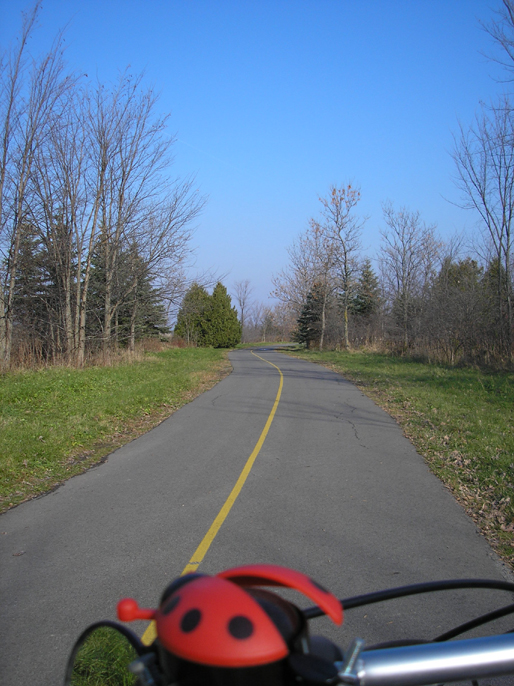 Oh the fun of freedom on three wheels.. Like the ladybug? That's my bell. Today I went on a long (long for me) bike ride by the Ottawa river. I want to get as much bike time as possible before the damnable snow puts a stop to my peddalry. Then I want snowshoes, so I can get wicked photos of beasts at their most winterized. Fluffy. This photo was taken halfway thru my ride.
Weight Loss progress
Yay I lost two pounds this week! Right now I'm doing behavioral conditioning to get me in touch with my non-pill-induced appetite. Harder than it sounds. Although I think this will be The Way to losing weight permanently. I can see myself doing this method every single day of my life and not getting tired of it.. Most diets are a huge pain in the ass.. but this isn't a diet. It's like you're using a computer and you don't know about a core utility program.. like specialized alarms.. this diet-changing method teaches you about the appetite alarm in your stomach... the one which many people (including myself) have learned to ignore. Now I actually FEEL hungry, and can tell the difference between psychological and physical hunger. Huge diff. So now, instead of relying on writing down all calories and all foods - this neat little notification program tells me when to start and stop eating to maintain a proper weight. Nifty. Some people are born knowing where this program is, of course.
Grape and Pill-age
Speaking of pills, I am having a party this weekend with some close friends - and of course I had to run out of painkillers. I have the hardcore twice-a-day controlled release pills, but not the "I NEED RELIEF NOW" pills. I have to stay away from alcohol, my normal method of replacing painkillers.. so basically I'm trying to use my TENS machine more and trying to meditate (I practice Raja Yoga routine, because one fuck up and I'm in big trouble. Emergency clinics don't prescribe Em-Strength painkillers. They prescribe crap like Codeine sometimes, low dose and high itch factor, just like straight Morphine. meditation) as much as possible. I'm paying more attention to my regular HathaOooh but I still like Morphine. Codeine metabolises into Morphine, but for some reason, it doesn't really tickle my fancy. Hurts my tummy more than Morphine. I'm on different pills that I'd rather not broadcast. They are the freedom givers. They free up some RAM for me, which is taken up by randomized pain-to-psyche distraction. A very temporary defrag.. but worth it.
People and Pain
Certain people lower pain... just by talking to them or being around them (etc). Mainly my Mom, my 2 close girlfriends, and a new Manfriend of mine is really quite good at it! - but one cannot rely on others... for a few good reasons... A) they can die B) they can decide they don't want you in their life C) they might get sick of being around you.. hehehe. I don't see my girlfriends as often as I'd like.. and my platonic guy friends.. wink wink.. come on guys, take me out!!!
Doggy and Pain
Of course Gordon helps a lot. Just looking at him and being around him makes me swoon with puppy love!! I groom him, train him, and play with him every day... and in my pain database, which I enter data in daily to track pain and other issues, I refer to my time with him as "PT" - puppy therapy.
Database and Research - Almost reaching the year mark!!
Yup, I have a database for my ails. Right now it's just a shitty spreadsheet, but I'm working on making a better database. I've had it for almost a year, so soon I will be able to work with the data and do something constructive with it. I've already tracked some very important patterns, which I will submit to various research organizations for Fibro, Endo, and CFS. New data, I think, as I am usually up to date on the latest published research in those fields. You can't rely on doctors to help you, Fibrofolks, Endofolks, and CFSfolks.. nope. Get researching, get reading.. I know it's hard at times, but it's worth it. BTW, I also like to make graphs.. hehehe pie charts, bar charts.. 3D even.. of course this takes me a shit load of time since I'm foggy in the head. I'll publish some here when I'm done sending it to the proper research institutes.
Electro-Goodness
My TENS machine was finally approved to be covered by the red-tape-beauties at Essential Health Services!! I was paying 51$ a month for the other one.. Hard decisions had to be made in my budget to incorporate this expense. Now I can go back to massages, and daily vitamins. Frigg, vitamins and supplements seem to be rising in price. I have a 1/2 cup of pills to take each day, including vitamins, painkillers, other supplements, etc. Isn't that funky? For the past two months I've cut on the vitamins and other supplements, so it comes to a 1/4 cup... but I've been feelings like crapola in certain areas. Some of the supplements I take: Spirulina, Multivitamin, extra Chromium, extra B vitamins, MSM, Omega 3-6-9, extra Calcium, etc. Why the extra? Well two main reasons 1) some of the pills I take eat essential nutrients 2) some experts call for more than the norm in terms of nutrients.
So that's the update. I have lots more to say.. but some of it is private and will only be shared with the proper females in my life!! And other stuff is still to come. I'm doing well, getting better inch by inch, am more happy than usual, and that's that! :) Thanks for reading this huge update ;)
Saturday, October 14, 2006
Heart Rate and Fatigue: The Emlucy way to Rejuvenation!
 With Fibro, Chronic fatigue, or simply being out of shape, the fatigue can be worse than anything else you've got. Not for me, I'd take the fatigue over the pain, but that's not a choice. What is a choice is helping the fatigue go away.
(The picture right is one I found on a cute site.. probably cute overload.. lol. It's friggin adorable.. so much it makes me grit my teeth!! love it)
What I've been doing lately is Target Heart Rate exercise, and it has been helping!! What's more, it can help pretty much anyone.. I said pretty much, but if you have a heart condition or some kind of jazz that'll be worse if you exercise.. don't. I do this at my own risk... and it has been causing more hurt, but at a good reward. I have had a little more energy. It's small, but for me - I'll take anything I can get.
Basically, I read through all my fibro books, cfs books, and related books - I read article after article on the Internet, I talked to my health care professionals, and then lastly I talked to people with fibro - and compiled this exercise regime!! Recently a few fibro and cfs friends have asked that I share my regime. Really it's not mine, it's just traditional health stuff we've heard over and over again.. but usually that stuff if the golden stuff, if you get my meaning.
Emlucy's Target Heart Rate Rejuvenator! ;)
Firstly, you're going to need a heart rate monitor - or you can do it manually. Find your Resting Heart Rate (RHR). Here's how:
Get nice and leisurely - relax, lay down, don't sit up!! Just get as relaxed as possible for 20 minutes. Then I want you to take your pulse. (See how many times your heart beats in 60 seconds OR use a heart rate monitor. I suggest a heart rate monitor, as if you have FMS or CFS you may lose count or have a crap time at multiplying if you're taking the quarters route).
My RHR: 65
Okay, now I need you to calculate your Maximum Heart Rate MHR. Women, subtract your age from 226, Men - subtract your age from 220. Personally, I just round the number.
My MHR: 226 - 26 = 200
So, the heart rate range is 65-200 - - then I rounded my number to 70 - just to make the next step cleaner and easier for Fibro Foggers and ADD'rs.
Next plot out on a piece of paper a little graph that looks like this:
70-80-90-100-110-120-130-140-150-160-170-180-190-200
Then, find rough half, quarter, and eighth points. Here are 14 numbers, so they divide 7 and 7 so between 130 and 140 is the half point (135) and then the quarter points would be the middle number of each of the seven. Highlight the numbers.
---------------------------------------------------------------------
70-80-90-100-110-120-130-135-40-150-160-170-180-190-200
---------------------------------------------------------------------
Okay, now you have your graph!! I put this on a magnetic board, to keep track of progress AND to remind me to exercise. So what do you do with the graph? Depends how sick you are:
If you're really sick, or really out of shape, your first week of exercise will focus on the first quarter: in my graph that would be 70-100. You want to do an exercise that keeps your heart rate in that zone for 15 minutes three times a week. Can't do it for 15? Do it as much as you can and then increase as you start getting healthier.
If you're moderately sick or moderately out of shape, start in the second between the first eighth and the second eighth. In my graph, that would be 80-120. Get yourself in that range for 15 minutes three times a week to begin.
From these two, you get the hang of it. Just increase accordingly.
What kind of exercise should you start off with? Work with what you have. I have a recumbent exercise bike, so that's what I use. You could use a treadmill, DDR, do Tai Chi, Yoga, Pilates, walking, jumping.. anything. You don't need fancy equipment. Oh, and watching scary movies doesn't count.. as that will build up adrenaline which won't be used if you don't work out. Get moving. Dancing to music is great. Just keep your heart rate in your beginner target range.
Increasing the workout to strengthen your heart, increase your energy, and lengthen your stamina is the next step:
After about three weeks, or less depending on your health, do it every second day, then every day for 15 minutes. At the same time, increase your target range by one eighth when you're ready. Never get up to your maximum heart rate, as you're asking for a flare up. Don't be silly!!!
You'll want to keep it within 5/8 and 3/4. After you can easily get in that range, you'll need to just increase the length of exercise, not the heart rate. You may never get there, that's okay. Take it to where you CAN. If you can only take it from 50%-60%, that's super! If it's only 30%-40%, that's still good!! Don't feel bad. Every inch on that graph counts!
I've noticed great results from this. Sure it's only a little bit to normal peoples' standards, but to someone with CFS it's like finding buried treasure! Every bit counts to better heart health.
When it's firmly part of your schedule.. you can move onto strength training.. that'll be next. I hope this is helpful!!
Friday, October 13, 2006
Against Many Odds
"If it is once again one against forty-eight, then I am very sorry for the forty-eight." Margaret Thatcher (a favorite lady of mine)
I'd say against all odds, but I'm trying to be reasonable - and all or nothing phrases often are unreasonable. Often but not always. Anyway, pretty much all my pills have a warning upon their little while label which pisses me off on some level:
"May cause severe weight gain."
Well duh. You could have told me that, as I struggle to stay at a reasonable weight. I'm trying harder and harder, and hopefully I'll get on a decent plateau of good behavior in order to reach my ideal weight: 176. Why 176? Well I visited this site that calculates your healthy weight according to your height, age, and sex, and it gave my BMI weight as well. The BMI is insane. Apparently Brad Pitt is obese according to traditional BMI. Ridiculous. 176. Good number. Hard when you're on 7 different pills with 7 "Severe" weight gain side effect. Frustrating to say the least. I'm lucky I'm not 300 lbs.. which is my phobic weight... I fear it more than any other phobia I have.. although I trust in myself that I will not get there, I'm just too stubborn for that.
Which is not to say that is a gross weight at all. But it is a bad weight for someone 5"8 with an illness that causes intense weakness, muscle fatigue, and sleepiness. It's hard to climb the stairs when you carry that much weight.
I'm all for big people. I like the way we look. I like the comfortable feeling of laying around on someone without feeling mostly bones. But my ideal weight is 176, and that would put me again into wearing non-plus clothing - medium/large. Weird. I have to upload this photo of me when I was skinny.. it's too funny. I have it on my magnetic board to remind me that it's possible.
So against many odds, I'm increasing my efforts to lose weight. Through the pain, I see that it's important. 176!!
The image was created by me in Terragen, copyright 2006 Emilie L. I call it "The Peaks of Imagination".
I'd say against all odds, but I'm trying to be reasonable - and all or nothing phrases often are unreasonable. Often but not always. Anyway, pretty much all my pills have a warning upon their little while label which pisses me off on some level:
"May cause severe weight gain."
Well duh. You could have told me that, as I struggle to stay at a reasonable weight. I'm trying harder and
 harder, and hopefully I'll get on a decent plateau of good behavior in order to reach my ideal weight: 176. Why 176? Well I visited this site that calculates your healthy weight according to your height, age, and sex, and it gave my BMI weight as well. The BMI is insane. Apparently Brad Pitt is obese according to traditional BMI. Ridiculous. 176. Good number. Hard when you're on 7 different pills with 7 "Severe" weight gain side effect. Frustrating to say the least. I'm lucky I'm not 300 lbs.. which is my phobic weight... I fear it more than any other phobia I have.. although I trust in myself that I will not get there, I'm just too stubborn for that.
Which is not to say that is a gross weight at all. But it is a bad weight for someone 5"8 with an illness that causes intense weakness, muscle fatigue, and sleepiness. It's hard to climb the stairs when you carry that much weight.
I'm all for big people. I like the way we look. I like the comfortable feeling of laying around on someone without feeling mostly bones. But my ideal weight is 176, and that would put me again into wearing non-plus clothing - medium/large. Weird. I have to upload this photo of me when I was skinny.. it's too funny. I have it on my magnetic board to remind me that it's possible.
So against many odds, I'm increasing my efforts to lose weight. Through the pain, I see that it's important. 176!!
The image was created by me in Terragen, copyright 2006 Emilie L. I call it "The Peaks of Imagination".
Sunday, September 24, 2006
Melding..
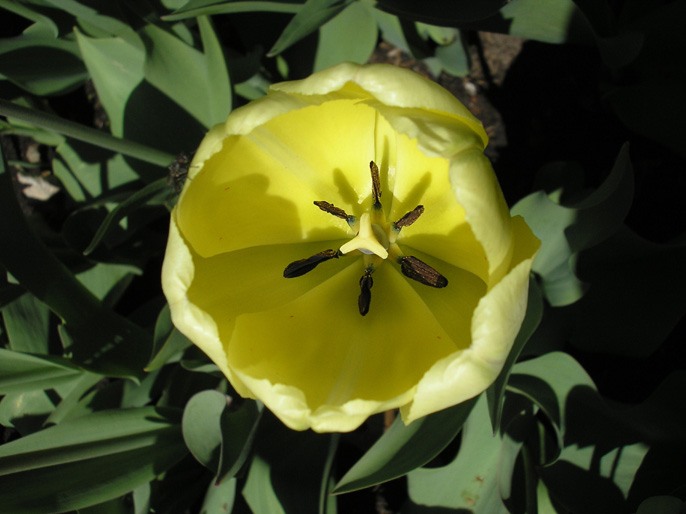 My Fibro site, Invisible Thorns, is now in this weblog. I just didn't have time to have many online projects, so I am thinning out things, and merging. So I'll just be posting more subjects on this weblog. As well as more of GORDON!
The picture to the left is from the Tulip Festival a few months ago, which I took whilst swooning as I was surrounded by so many more beautiful blooms. :)
Saturday, January 01, 2000
Invisible Illness Links
Here are the links that were on my retired fibro website :) (I'm incorporating the site into this blog, I just don't have the energy for too many blogs)
(ever growing!)
FMS/CFS/Invisible Illness Links:
(ever growing!)
- FMS/CFS Foothold
- Open Letter to Those Without FMS/CFS the letter that started the watershed of other fms/cfs letters.
- Ten Resolutions is an essential read, an excellent site. Make sure you read this.
- A Hummingbirds Guide To M.E. (FMS)
- FMS-CFS Canada "Compassion in Action" has great information and resources.
- Fibro/Myofascial Pain Syndrome/TMJ at the Invisible Disabilities Association of Canada.
- Advice to a New Patient By Bruce Campbell (no, not Ash)
- Immune Support.com FMS/CFS News, articles, chat, etc. Great!
- Chronic Pain Haven - articles on chronic pain.
- Paintracking.Com is an excellent guide to FMS. It also has links to warn you again questionable products and services/treatments. Excellent.
- Quackwatch is an essential site that talks about dubious treatments, products, etc. Good to check out weird therapies.
- Pain.Com This page will be profiled on the blog when I have time, but if you need to find a pain clinic - this is the place. A must for pain sufferers, visit the Site Map to take full advantages of this site..
- CFS and The Alexander Technique by Martin Finnegan
- Friends and Kindness By Mary Campbell
- Managing My Fibromyalgia also visit the "Flare-Up Management article here which has good ideas.
- Pain News and Updates super!
- Fibromyalgia weblog by Gambling Housewife is a great fibro blog with news, personal experience, and more. Love it.
- Borg of Space is a cool blog about Ingeborg, who has severe ME in the Netherlands.
- Girl Interrupted is a sweet weblog written by a girl in her late twenties. She has a good proactive attitude, too!
- Fibromyalgia Weekly is a new weekly Podcast (audio, you can download the mp3 files) on FMS and CFS. A must-hear.
Fibro Weblogs
ProHealth Newsletter FM Edition AND new links to go to the sidebar
Hey All,
I love the Prohealth newsletters. I suggest you enroll. They also have a great CFS Newsletter that I get. It's often, informative, and reminds you to keep on researching, reading, and hoping.
Here's a great "coping corner" at Immune support too:
------------------------------
"Critical New Piece of Fibromyalgia Puzzle Found?
Pieces of the Fibromyalgia puzzle are slowly falling into place, and researchers are moving toward a unified theory that explains the etiology and pathogenesis of the disease.
While the conviction among the majority of Fibromyalgia researchers is that Fibromyalgia represents a significant sensitization of the brain and spinal cord, some leading researchers have recently formed a theory that takes the "Sensitization Theory" a step further, to what can be called the "Hippocampus Hypothesis" or "Dopamine Hypothesis." This fascinating theory states that FM is primarily a brain dysfunction resulting from stress-induced physiological changes to a part of the brain called the hippocampus and to the important neurotransmitter that it regulates - dopamine.
Specifically, the hippocampus is extremely sensitive to stress, and in fact is the brain organ that enables us to respond to environmental stressors in a way that helps us avoid danger. The best example of the beneficial stress response is when our ancestors crossed paths with a saber tooth tiger - an immediate "fight or flight" response was mandatory to ensure survival. Studies have shown that chronic stress, however, can contribute to a disruption of normal hippocampus function. The hippocampus plays a major role in pain perception and memory formation, and it is involved in controlling the production of that crucial brain neurotransmitter, dopamine. Dopamine abnormalities have been linked to "restless leg syndrome," increased pain, and feelings of self doubt, anxiety, and problems with memory formation.
If the "Dopamine Hypothesis" is correct, then it is reasonable to assume that drugs that restore normal dopamine levels and activity in the brain should have a therapeutic effect when administered to Fibromyalgia patients.
And this is where the "Dopamine Hypothesis" picks up steam. Andrew Holman, MD, recently conducted a controlled, double blind study of the drug pramipexole with several Fibromyalgia patients. Pramipexole, sold under the brand name Mirapex™, is approved for treatment for Parkinson's disease - a primary dopamine disorder. Patients experienced significant improvement in their symptoms. Another drug that affects dopamine and has been approved by the FDA as a treatment for restless legs syndrome - ropinirole - also met with remarkable success in another recent Fibromyalgia study conducted by Dr. Holman.
All told, the Dopamine Hypothesis looks promising for several reasons. It ties in nicely to the pathogenesis of the disease - that the onset of Fibromyalgia frequently occurs during times of prolonged or intense emotional or physical stress, when the hippocampus may become overworked and become dysfunctional as a result. And it ties into the fact that dopamine, which is largely regulated by the hippocampus, may cause many of the symptoms of Fibromyalgia when its levels are unregulated.
I would like to acknowledge Patrick B. Wood, MD, and Dr. Holman for their brilliant work with brain imaging, neurotransmitter physiology, and creative pharmaceutical approaches to normalizing/regulating dopamine in Fibromyalgia. Their work has proven beneficial to many Fibromyalgia patients and may hold promise for treatment of millions more. I applaud their bold, creative, and compassionate work.
Dr. Wood explains the Dopamine Hypothesis in easy-to-understand language, using computer generated graphics and patient and doctor interviews in the acclaimed Fibromyalgia DVD "Fibromyalgia: Show Me Where It Hurts" To purchase a copy of this DVD, please visit the ProHealth store.
Wishing you health and hope,
Rich Carson
ProHealth Founder and CFS Patient"
---------------------------------------------------------------------------------------
Great Tool for Trigger Point and Referred Pain : Trigger Point Therapy (quick review)
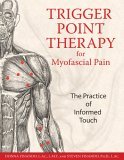 Great, a Must Have Tool for All Fibromyalgia Sufferers!
This is a book I use almost daily. I love it. Commendations to Donna and Steven Finadno for writing a book that eases trigger point pain! As someone who suffers from acute trigger point discomfort, I wholly believe that this is a powerful tool in releasing some, if not all, the tension and pain from certain points. It also gives great insight into how to stop the tension from beginning in the first place, correcting posture, habits, and basically the way you move yourself in general. It makes you more aware of your trigger points, as an interconnected bodily web. It treats trigger points as they should be treated, holistically.
The Short Circuit of Trigger Points to Referred Pain
Many people I've talked to, that have trigger point issues, are unaware of how unusual trigger points behave. They don't usually understand that if you have a pain in your neck, for example, it may be due to pressure points on your shoulder being stimulated. Or if you have pain in your jaws, it may be your neck, or even your shoulders causing the pain, or the opposite. Headaches, similarly, can be caused by neck or shoulder issues.
Reference Guide
At the end of the book is an EXCELLENT picture to page reference guide called the Pain Pattern Index (p. 229-235). Basically, it shows body parts arranged by area groups (posterior, anterior, legs, etc), each group has several little pictures with red dots. Those dots show where the pain is, so if you feel pain in your jaws, it'll show you what muscle group is being triggered - and the page number where you can find RELIEF!! How often I have said whispered thank-yous to this book.
Long Term Solutions
What's great about this book is that it teaches you how to be aware of your trigger points, so that you avoid setting off the painful chain reactions.
However...
This is not a book to be read by a lay person. I recommend that if you are not familiar with anatomy, that you get yourself a pocket guide to anatomy - especially musculature. It's not a super advanced medical book, so don't be too daunted!! It's just easier if you know your muscles and your bones!
My Quick Review:
+ such a great overall tool
- hard for lay persons to read
+ Pain Pattern Index
+ causative factors of trigger point activation
- I would like to see more points explored.
+ stretching exercises and strengthening exercises
+ well organized
+ excellent graphics!
Go, get it now!!!
Art Therapy for Invisible Illnesses
Why Art Therapy?
The thing about invisible illnesses is that they're invisible. It's harder to fight what you can't see, and this site, primarily, is about uncovering and soothing the invisibility. Art therapy is the perfect way to gain visibility of your problems, and to start understanding your state of living. Why is seeing it so important? We're very visual creatures, and seeing things, or even touching them if you take it one step further and want to create a sculpture, tapestry, etc, makes thing more real - more understandable. It's the tangible that gives more control. More of our senses can play with the ideas and problems, and come up with solutions and uses. Our brain is a magnificent machine capable of thinking subconscious and unconsciously, and creative representations of our problems can REALLY help with your inner brains to work things out.
I was recently inspired to do the art therapy page via Lisa Sweet's digital Art as some of her pictures hit my disease right on the nail. It triggered the Art Therapy gene in me and I have since then done a lot of art therapy.
I wasn't ready yet to put it into words, as I wanted to explore the mode of this therapy more. I needed to BE art therapy before I could pass it on to you.
This series will be focusing on issues that groups of illnesses face, not just one illness. I hope it can be used by just about anyone, and you don't need a lot to start off. Pencil and paper, pen and paper, canvas, digital paint programs, whatever you have at your disposal.
----------
Power comes from knowledge of the self, and what better way to understand an invisible illness than by exploring its character. For each of our personal disease/symptom profile, we have the ability to give a face or a shape to it, thereby giving that tangible extra cut to the jigsaw puzzle. I won't deeper into the value of characterizing your symptom, because I deeply believe that the value is personal, individual to each case and each symptom.
I hope you find this exercise valuable, for that is what I strive for. I will go through each step using myself as an example, as I have full and constant access to myself ;)

(This part will be important in future posts:)
Identification and Exploration: Symptom Synopsis
1) Pick a symptom. For this, I will pick carpal tunnel.
2) Describe the symptom, not as you would in a medical journal, but describe what it does to you personally. What does it feel like? Wrist, hand, and arm pain. Tingling jolts. Paralysis of fingers. Disfiguring of joints. Intense electrical bursts of burning sharp pain. Aches.
3) What brings on the symptom? (If the symptom is just there and nothing causes it, jot that down). Using hands, bad weather changes, bad hand posture.
4) What alleviates or at least helps the symptom? (if nothing helps, just put nothing) Wearing braces on the hands and wrists, anti-inflammatory, pain relief rub.
5) What feelings do you have about this symptom? Anger, resentment, frustration, exasperation, impatience, ignoring, sadness.
6) What are your fears about this symptom? That I will one day completely lose the use of my hands, that I will have to be operated upon, that the pain will get too intense for my mentality to uphold.
7) How does this primarily alter your life? I am not able to use my hands in many ways anymore. It makes me feel more disabled, I can't use the computer as much as want or sometimes as much as I need to, in order to stay social, productive, and connected.
Hold on to these notes, as you may want to further explore this symptom in another mode.
You may feel like you're in complaining mode, but this is a good kind of complaining. We're exploring, not complaining. Be as honest as possible and you'll get more out of this exercise. Now the next parts come in different flavours: abstract, symbolic, and realism. Today's post is all about abstract expression! More specifically, today's post is the first in the abstract series:
-Simplified Abstract Project-
You can go wild on the design of an abstract work, it's so much fun and you don't have to worry about making it "good" or "pretty". It can be a scribble, a coloured shape, a big mess of blotches.. This is but ONE technique of abstract, as I am not about to write them all down.. Remember the carpal tunnel???? ;) Be patient, and if anyone is interested, I will eventually get more posting out there.
1) Reread your synopsis of your symptom, and jot down any further notes you have about it. Include any feelings, any themes you find, etc, and really study it for a while longer. Take a day to think about it, or sleep on it. Sometimes dreams will activate the most amazing insights.
2) Get out your piece of paper, or paint program, and first figure out what shape this symptom is.. is it a triangle of sharp pain? Is it a square, like a cage? Is it a thin rectangle like a cruel confining dog run in which you pace? Is it a circular cycle of repetition? Or is it something more complex? Try to limit your first try with a single shape, then as you further develop your style, move onto multiple shapes. You can go wild with shape selection, you can even do blobs or slashes or holes or whatever you want. In my example (below left) I have made a blob/spike shape to represent dull aches and intense sharp pains.
3) What colour is the symptom? Is it red with inflammation? Is it blue like a bruise? Is it dark grey for dull and maddeningly mundane? Is it a festering green? Is it a blossoming green as in it has a life of its own? Is it a rusty colour that's being worn away by the elements? Explore what colour it would be. I used greens and yellows to represent an acidic feeling for the base. More to come on colouration when I talk about details.
NB: It's important that you focus on the symptom and not on how the picture "looks". Use the looks as a bookmark for certain thoughts, but don't use the image alone to make it attractive. It's not supposed to be good or pretty, it's supposed to help you explore. You might be as good as William Waterhouse, but this isn't about "good". If the colours clash, that's okay. If it looks childish, that's okay! Actually, that can be a very good thing, as you are unabashedly and uncaringly expressing! Unconditionally! GO WILD, but stay on track.
4) Now for a background, you can do this step as #3, and switch that one for this one, but I like doing the background next. It helps set the mood for the details, but doesn't colour the subject - the symptom. But again, your choice. For my Simplified Abstract, I have made the background bruise blue and frustration purple, gradated as they feed off each other. I also added a "halo" effect around the bulbous part of the shape, I'm not sure why logically - but it felt like that. Upon further exploration, it feels like a halo of pain, like an area of pain that's not tangible. THESE are the little things, the details, that will come out.. jot these down.
 5) Details aren't needed. I give this option for further exploration, but also as an opening to the next abstract project. To add details is to explore the symptom in details, to see the minute connections and conditions important for further inspection. I will go through what I did:
-I added the red veiny marks to show inflammation, and the pulsing pain that comes with it. Some of the shape is lacking in red, because carpal tunnel also restricts circulation to certain parts of the hand... causing tingling and paralysis.
-I added the wiry white squiggly lines to represent sharp nervous electrical pain.
-I added the black spidery mark to represent a growing "Evil" feeling pain, something I fear and hate. The idea that I might not heal from it, the idea that I may have to stop using my computer at some point, or stop painting with my hands.. Although I know that there are other ways of typing. Mouth-Pen typing is possible.
-Lastly, I have added little blue balls at the end of the sharp edges to represent bloated pain, like my fingers are going to pop!
You can even name it, write a short poem about it, or use it in an upcoming art therapy project. I call this: "Tendon Wrangling Gone Wrong." It's not something I'd hang up on my wall, but I learned some things from this experience. For example, I learned that I ignore the pain far too much, and use the computer without pause far too much. I must learn to take more breaks!!!!!
I would LOVE to see what you come up with, so please feel free to add a link to your picture in the comments, or email me your picture, etc. Adding a description of how you came up with it would also help others understand the process. Also, if you learned anything, that would be a bonus to hear!
I can't wait to share the next exercise with you! Stay positive, stay proactive, and productive in your search, and you will find meaning and perhaps overcome something bulky in your way.
-----------------
This is part two in the series of Art Therapy for Invisible Illnesses. In this part, we will delve into a simplistic (it's best to start simple and build up) symbolic mode of painting. Please refer to the Previous Post which contains the format for symptom exploration. You can use your own method to profile a symptom, and for the purpose of this post, I will profile another one to give you more ideas. I have also simplified the format of the profile, you can copy/paste it to a text file if you wish, in order to fill it out or print it out. Click here for a printable format symptom profile sheet.
Example Symptom Profile
1) Symptom: Fatigue
2) Characteristics: sluggishness, energy draining, sleepiness, foggy mind, slow reaction time, lowered memory function, comprehension skill lower, low stamina...
3) Triggers: stress, weather change, pills, exercise, mental activity, pain, general illness cause.
4) What eases it: good sleep, good diet, exercise (vicious cycle), good stable weather, other pills, happiness, ease, certain non-drug treatments.
5) Feelings associated with it: I feel caged, enslaved by it, frustrated, fearful, stressed, annoyed, alarmed, exhausted emotionally, antisocial, lazy, persecuted, lesser..
6) Relevant Fears: that I will continue to be this tired, that I'll get morbidly fat, that people think it's only because I'm lazy, that people don't understand and won't ever understand, that one day I'll fall asleep in a dangerous place, or faint in a dangerous place or situation..
7) Lifestyle Effects: disabling, can't do a quarter of what I used to when I wasn't so sick, I can't go anywhere alone for long, I sleep a lot, I get faint from it.
Now, we use this profile to seek symbolic parallels, imagery, things we can use to symbolically express the chosen symptom. If you don't want to analyze it long, try to think:
What images are first conjured when you think of the symptom? With fatigue, I think of a heavy-lidded and pink eye, sleepy and wary of the day. That leads me to think of a ball and chain on eyelids.
For your symptom, it may be harder. Say you have something more abstract, and it's not easy to come up with images. During which times, go through the symptom profile and try finding symbols for the way you FEEL about an illness, what you fear about it, or how it changes your life. For example, in this example profile, I can also get a ball and chain imagery from the trapped feeling of being so fatigued.
Another example would be a digestive disorder, specifically an inflammatory or nervous intestinal disorder may be hard to characterize. Sure you could draw intestines that are red and inflamed... but symbolism is more about comparing it to something else in order to make parallels which offer insight. You could draw a long winding road, along jagged red rocks, with cars whom have spikey tires riding on it.. and if this involves serious constipation - then make those cars in a traffic jam (I am not joking about these disorders so don't get insulted) or if it is more watery - make the road flooded.
More examples? Well let's say you have severe neck pain - perhaps you could draw a church with a broken steeple. If you have a reality disorder (hallucinations) you can show this as a more psychedelic expression, like a magenta dragon blowing white flames that end in humanoid shapes, seen only by one character in the art work but not the others...
Or, if we were to use the last post's ailment of Carpal Tunnel - that can be a hard one. You could show lots of wires that have bunched up and there are little bumps along the tubing. The cables could be hooked up to one of those industrial digging machines.. Okay, so I am not going to get deep into it.. use your wonderful imagination to create your own Art Therapy masterpiece.
Let me explain what I came up with. I call it: "Fatigue in Butter":

I wanted to express the chronic fatigue body as something finite, a weak solid, something that melts under pressure. Butter. The smooth stones represent the weight of fatigue, the stressors that cause the fatigue, and how fatigue wears through a person. The background shows a dirty sunrise, as people with severe insomnia know: sunrise without a sleep-filled night can be a hateful thing. You want more time to sleep, more opportunity to beat the monsters of sleep. If you could only sleep, you could get those damned boulders off your back and get "solid" again. The purple foreground symbolizes bruising, as fatigue hurts. People without severe fatigue might not know this, and so it's another reason I included it: as I want to express. This is what art therapy has done for me: I've been able to make tangible the invisible, so that the invisible thorns become easier to contemplate. I'm a big believer in contemplation, meditation, deliberation... it can really help you deal with things, solve problems, come up with game plans, or solidify something your subconscious and unconscious may be having problems with.
A note about Art Therapy
So many people with invisible illnesses suffer from the thought: what if I'm crazy and I'm not physically sick? Why do they think that? Well because if it's invisible, you're the only one going through it 100%. This may cause doubts in others, or they might just not understand, or you might doubt that they believe you since they can't possibly know what you're going through. One way to help this is to get it on paper, digital or pulpy paper, and show it to loved ones, or just have it around for yourself. Just being able to see something, (or if you can't see - then sculpt it! then you can FEEL it) and solidify it can do wonders for the psyche. Just try it! Get that pencil, that paper, and get your feelings out. It may be hard at first. You may have too much to get out, that's why I'm suggesting you take it one symptom, one step, at a time. And start very simply... cartoonish, childlike, and build up from there. You'll find it a lot easier since you'll be under less pressure to produce the next Mona Lisa or Guernica or Self Portrait with Baked Beans. If you can't do your own art, go through art websites, books, magazines, museums, and try to pick out a few pieces that express your feelings. Get a postcard of this art, order a print, cut it out of the magazine, or whatever, and keep it in a scrapbook of your "symptom similar art works". This can be a touchstone for your feelings without actually having to do the art work... however give your own work a try if you can.
Can't use your hands or one of your hands?
I've learned to use my left hand for many things (my mouse hand is my left, and I do most computing with it, as well as writing with it on some days), and taught myself to be tolerably ambidextrous, and I'm working on learning mouth painting. Why? Fibro-enhanced Carpal Tunnel syndrome! I see it as an opportunity to be a quarter as good at alternative body-part painting as these guys, Mouth and Foot painters. My family and I have long supported these artists, and they send us beautiful calendars, bookmarks, and postcards that BLOW ME AWAY! How cool is it? Mouth painting is darned hard, and if you just take a look at the utter craftsmanship that come from feet and mouths.. well, you'll be motivated to say "get bent" the dreaded hand impairment. Okay, one step at a time!!! Don't put too much pressure on yourself, just know that there are alternatives to using the right or left hand you're so used to ;)
Ok, more to come. Good luck with your paintings, and send 'em in!
-----------------
The thing about invisible illnesses is that they're invisible. It's harder to fight what you can't see, and this site, primarily, is about uncovering and soothing the invisibility. Art therapy is the perfect way to gain visibility of your problems, and to start understanding your state of living. Why is seeing it so important? We're very visual creatures, and seeing things, or even touching them if you take it one step further and want to create a sculpture, tapestry, etc, makes thing more real - more understandable. It's the tangible that gives more control. More of our senses can play with the ideas and problems, and come up with solutions and uses. Our brain is a magnificent machine capable of thinking subconscious and unconsciously, and creative representations of our problems can REALLY help with your inner brains to work things out.
I was recently inspired to do the art therapy page via Lisa Sweet's digital Art as some of her pictures hit my disease right on the nail. It triggered the Art Therapy gene in me and I have since then done a lot of art therapy.
I wasn't ready yet to put it into words, as I wanted to explore the mode of this therapy more. I needed to BE art therapy before I could pass it on to you.
This series will be focusing on issues that groups of illnesses face, not just one illness. I hope it can be used by just about anyone, and you don't need a lot to start off. Pencil and paper, pen and paper, canvas, digital paint programs, whatever you have at your disposal.
----------
Power comes from knowledge of the self, and what better way to understand an invisible illness than by exploring its character. For each of our personal disease/symptom profile, we have the ability to give a face or a shape to it, thereby giving that tangible extra cut to the jigsaw puzzle. I won't deeper into the value of characterizing your symptom, because I deeply believe that the value is personal, individual to each case and each symptom.
I hope you find this exercise valuable, for that is what I strive for. I will go through each step using myself as an example, as I have full and constant access to myself ;)

(This part will be important in future posts:)
Identification and Exploration: Symptom Synopsis
1) Pick a symptom. For this, I will pick carpal tunnel.
2) Describe the symptom, not as you would in a medical journal, but describe what it does to you personally. What does it feel like? Wrist, hand, and arm pain. Tingling jolts. Paralysis of fingers. Disfiguring of joints. Intense electrical bursts of burning sharp pain. Aches.
3) What brings on the symptom? (If the symptom is just there and nothing causes it, jot that down). Using hands, bad weather changes, bad hand posture.
4) What alleviates or at least helps the symptom? (if nothing helps, just put nothing) Wearing braces on the hands and wrists, anti-inflammatory, pain relief rub.
5) What feelings do you have about this symptom? Anger, resentment, frustration, exasperation, impatience, ignoring, sadness.
6) What are your fears about this symptom? That I will one day completely lose the use of my hands, that I will have to be operated upon, that the pain will get too intense for my mentality to uphold.
7) How does this primarily alter your life? I am not able to use my hands in many ways anymore. It makes me feel more disabled, I can't use the computer as much as want or sometimes as much as I need to, in order to stay social, productive, and connected.
Hold on to these notes, as you may want to further explore this symptom in another mode.
You may feel like you're in complaining mode, but this is a good kind of complaining. We're exploring, not complaining. Be as honest as possible and you'll get more out of this exercise. Now the next parts come in different flavours: abstract, symbolic, and realism. Today's post is all about abstract expression! More specifically, today's post is the first in the abstract series:
-Simplified Abstract Project-
You can go wild on the design of an abstract work, it's so much fun and you don't have to worry about making it "good" or "pretty". It can be a scribble, a coloured shape, a big mess of blotches.. This is but ONE technique of abstract, as I am not about to write them all down.. Remember the carpal tunnel???? ;) Be patient, and if anyone is interested, I will eventually get more posting out there.
1) Reread your synopsis of your symptom, and jot down any further notes you have about it. Include any feelings, any themes you find, etc, and really study it for a while longer. Take a day to think about it, or sleep on it. Sometimes dreams will activate the most amazing insights.
2) Get out your piece of paper, or paint program, and first figure out what shape this symptom is.. is it a triangle of sharp pain? Is it a square, like a cage? Is it a thin rectangle like a cruel confining dog run in which you pace? Is it a circular cycle of repetition? Or is it something more complex? Try to limit your first try with a single shape, then as you further develop your style, move onto multiple shapes. You can go wild with shape selection, you can even do blobs or slashes or holes or whatever you want. In my example (below left) I have made a blob/spike shape to represent dull aches and intense sharp pains.
3) What colour is the symptom? Is it red with inflammation? Is it blue like a bruise? Is it dark grey for dull and maddeningly mundane? Is it a festering green? Is it a blossoming green as in it has a life of its own? Is it a rusty colour that's being worn away by the elements? Explore what colour it would be. I used greens and yellows to represent an acidic feeling for the base. More to come on colouration when I talk about details.
NB: It's important that you focus on the symptom and not on how the picture "looks". Use the looks as a bookmark for certain thoughts, but don't use the image alone to make it attractive. It's not supposed to be good or pretty, it's supposed to help you explore. You might be as good as William Waterhouse, but this isn't about "good". If the colours clash, that's okay. If it looks childish, that's okay! Actually, that can be a very good thing, as you are unabashedly and uncaringly expressing! Unconditionally! GO WILD, but stay on track.
4) Now for a background, you can do this step as #3, and switch that one for this one, but I like doing the background next. It helps set the mood for the details, but doesn't colour the subject - the symptom. But again, your choice. For my Simplified Abstract, I have made the background bruise blue and frustration purple, gradated as they feed off each other. I also added a "halo" effect around the bulbous part of the shape, I'm not sure why logically - but it felt like that. Upon further exploration, it feels like a halo of pain, like an area of pain that's not tangible. THESE are the little things, the details, that will come out.. jot these down.
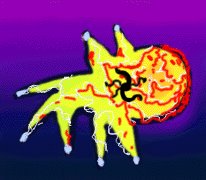 5) Details aren't needed. I give this option for further exploration, but also as an opening to the next abstract project. To add details is to explore the symptom in details, to see the minute connections and conditions important for further inspection. I will go through what I did:
-I added the red veiny marks to show inflammation, and the pulsing pain that comes with it. Some of the shape is lacking in red, because carpal tunnel also restricts circulation to certain parts of the hand... causing tingling and paralysis.
-I added the wiry white squiggly lines to represent sharp nervous electrical pain.
-I added the black spidery mark to represent a growing "Evil" feeling pain, something I fear and hate. The idea that I might not heal from it, the idea that I may have to stop using my computer at some point, or stop painting with my hands.. Although I know that there are other ways of typing. Mouth-Pen typing is possible.
-Lastly, I have added little blue balls at the end of the sharp edges to represent bloated pain, like my fingers are going to pop!
You can even name it, write a short poem about it, or use it in an upcoming art therapy project. I call this: "Tendon Wrangling Gone Wrong." It's not something I'd hang up on my wall, but I learned some things from this experience. For example, I learned that I ignore the pain far too much, and use the computer without pause far too much. I must learn to take more breaks!!!!!
I would LOVE to see what you come up with, so please feel free to add a link to your picture in the comments, or email me your picture, etc. Adding a description of how you came up with it would also help others understand the process. Also, if you learned anything, that would be a bonus to hear!
I can't wait to share the next exercise with you! Stay positive, stay proactive, and productive in your search, and you will find meaning and perhaps overcome something bulky in your way.
-----------------
This is part two in the series of Art Therapy for Invisible Illnesses. In this part, we will delve into a simplistic (it's best to start simple and build up) symbolic mode of painting. Please refer to the Previous Post which contains the format for symptom exploration. You can use your own method to profile a symptom, and for the purpose of this post, I will profile another one to give you more ideas. I have also simplified the format of the profile, you can copy/paste it to a text file if you wish, in order to fill it out or print it out. Click here for a printable format symptom profile sheet.
Example Symptom Profile
1) Symptom: Fatigue
2) Characteristics: sluggishness, energy draining, sleepiness, foggy mind, slow reaction time, lowered memory function, comprehension skill lower, low stamina...
3) Triggers: stress, weather change, pills, exercise, mental activity, pain, general illness cause.
4) What eases it: good sleep, good diet, exercise (vicious cycle), good stable weather, other pills, happiness, ease, certain non-drug treatments.
5) Feelings associated with it: I feel caged, enslaved by it, frustrated, fearful, stressed, annoyed, alarmed, exhausted emotionally, antisocial, lazy, persecuted, lesser..
6) Relevant Fears: that I will continue to be this tired, that I'll get morbidly fat, that people think it's only because I'm lazy, that people don't understand and won't ever understand, that one day I'll fall asleep in a dangerous place, or faint in a dangerous place or situation..
7) Lifestyle Effects: disabling, can't do a quarter of what I used to when I wasn't so sick, I can't go anywhere alone for long, I sleep a lot, I get faint from it.
Now, we use this profile to seek symbolic parallels, imagery, things we can use to symbolically express the chosen symptom. If you don't want to analyze it long, try to think:
What images are first conjured when you think of the symptom? With fatigue, I think of a heavy-lidded and pink eye, sleepy and wary of the day. That leads me to think of a ball and chain on eyelids.
For your symptom, it may be harder. Say you have something more abstract, and it's not easy to come up with images. During which times, go through the symptom profile and try finding symbols for the way you FEEL about an illness, what you fear about it, or how it changes your life. For example, in this example profile, I can also get a ball and chain imagery from the trapped feeling of being so fatigued.
Another example would be a digestive disorder, specifically an inflammatory or nervous intestinal disorder may be hard to characterize. Sure you could draw intestines that are red and inflamed... but symbolism is more about comparing it to something else in order to make parallels which offer insight. You could draw a long winding road, along jagged red rocks, with cars whom have spikey tires riding on it.. and if this involves serious constipation - then make those cars in a traffic jam (I am not joking about these disorders so don't get insulted) or if it is more watery - make the road flooded.
More examples? Well let's say you have severe neck pain - perhaps you could draw a church with a broken steeple. If you have a reality disorder (hallucinations) you can show this as a more psychedelic expression, like a magenta dragon blowing white flames that end in humanoid shapes, seen only by one character in the art work but not the others...
Or, if we were to use the last post's ailment of Carpal Tunnel - that can be a hard one. You could show lots of wires that have bunched up and there are little bumps along the tubing. The cables could be hooked up to one of those industrial digging machines.. Okay, so I am not going to get deep into it.. use your wonderful imagination to create your own Art Therapy masterpiece.
Let me explain what I came up with. I call it: "Fatigue in Butter":
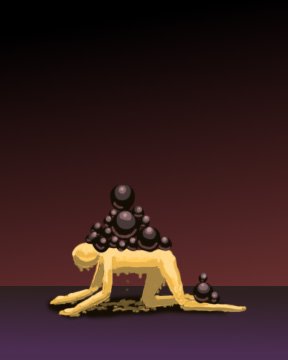
I wanted to express the chronic fatigue body as something finite, a weak solid, something that melts under pressure. Butter. The smooth stones represent the weight of fatigue, the stressors that cause the fatigue, and how fatigue wears through a person. The background shows a dirty sunrise, as people with severe insomnia know: sunrise without a sleep-filled night can be a hateful thing. You want more time to sleep, more opportunity to beat the monsters of sleep. If you could only sleep, you could get those damned boulders off your back and get "solid" again. The purple foreground symbolizes bruising, as fatigue hurts. People without severe fatigue might not know this, and so it's another reason I included it: as I want to express. This is what art therapy has done for me: I've been able to make tangible the invisible, so that the invisible thorns become easier to contemplate. I'm a big believer in contemplation, meditation, deliberation... it can really help you deal with things, solve problems, come up with game plans, or solidify something your subconscious and unconscious may be having problems with.
A note about Art Therapy
So many people with invisible illnesses suffer from the thought: what if I'm crazy and I'm not physically sick? Why do they think that? Well because if it's invisible, you're the only one going through it 100%. This may cause doubts in others, or they might just not understand, or you might doubt that they believe you since they can't possibly know what you're going through. One way to help this is to get it on paper, digital or pulpy paper, and show it to loved ones, or just have it around for yourself. Just being able to see something, (or if you can't see - then sculpt it! then you can FEEL it) and solidify it can do wonders for the psyche. Just try it! Get that pencil, that paper, and get your feelings out. It may be hard at first. You may have too much to get out, that's why I'm suggesting you take it one symptom, one step, at a time. And start very simply... cartoonish, childlike, and build up from there. You'll find it a lot easier since you'll be under less pressure to produce the next Mona Lisa or Guernica or Self Portrait with Baked Beans. If you can't do your own art, go through art websites, books, magazines, museums, and try to pick out a few pieces that express your feelings. Get a postcard of this art, order a print, cut it out of the magazine, or whatever, and keep it in a scrapbook of your "symptom similar art works". This can be a touchstone for your feelings without actually having to do the art work... however give your own work a try if you can.
Can't use your hands or one of your hands?
I've learned to use my left hand for many things (my mouse hand is my left, and I do most computing with it, as well as writing with it on some days), and taught myself to be tolerably ambidextrous, and I'm working on learning mouth painting. Why? Fibro-enhanced Carpal Tunnel syndrome! I see it as an opportunity to be a quarter as good at alternative body-part painting as these guys, Mouth and Foot painters. My family and I have long supported these artists, and they send us beautiful calendars, bookmarks, and postcards that BLOW ME AWAY! How cool is it? Mouth painting is darned hard, and if you just take a look at the utter craftsmanship that come from feet and mouths.. well, you'll be motivated to say "get bent" the dreaded hand impairment. Okay, one step at a time!!! Don't put too much pressure on yourself, just know that there are alternatives to using the right or left hand you're so used to ;)
Ok, more to come. Good luck with your paintings, and send 'em in!
-----------------
Pain Tool: Drug Store Pain Patches - Reviews and How-To's
THIS POST IN IN PROGRESS, but since i am taking so long to complete it, I thought you might enjoy perusing it now! I will add to it as I get more experience with the patches, so you may call this a perpetual post.
Disclaimer: I am not a doctor, ask your doctor before using these, read the packaging carefully, and be an informed consumer. I have fibro and may be more sensitive to these patches, and I am not allergic to any of the products I have tested (well not much). This is simply a post on my findings. Also, remember that as you age, your skin gets thinner and therefore is more susceptible to burns and irritation from these patches. A more careful testing period is recommended, but more recommended is that you talk to your doctor. For heating patches, it is recommended that you wear them OVER cloth or clothes in order to minimize possible burns.
Intro
Finally, after a month of testing and documenting, I have an article that I am sure can help sufferers of fibro and fibro-like pain. Pain patches, if you're not allergic to them, should and must be part of your pain-relieving toolkit. I will talk about the rest of the toolkit as I find the tools, but this article is all about pain patches and how they can help YOU!
I have severe pain from Fibro, and if my pain is under 7/10, these patches works wonders. If I have a pain level of 6, it'll bring it down to a 5 or 4/10 through distraction of nerves, as well as the mind. As the nerves feel a strong sensation other than pain (be it menthol or capsacin, etcetera), they focus their attention on the "louder" pain, so as long as your pain isn't intense.. this is a good plan. Some of them also have the added bonus of aromatherapy, or increasing circulation, but enough intro - here's the data I collected. I'm no scientist, so don't laugh at my lack of professionalism here, friends. ;)
Product Name: Rub A535 Dual Action Patch
Type: Menthol-type
Application: Big patches, best to cut them down to a smaller size, otherwise it's hard to keep it from sticking to itself.
Stickiness: 5/10
Can you unstick and restick the product? Not well.
Comfort of Patch: Good, but very "gooey" - which might be off-putting to some users.
Sensation: At first it's cool and wet, then it gets warmer and warmer. The amount of warmth may disturb some users around more sensitive spots (neck for example). Unlike some patches, I always knew it was there, the distraction level from my pain was well worth the extra price you pay with this.
Pain Relief: The sensations are distracting, and if you use the patch properly, this distracting action will trick the brain into feeling less pain.
Time Active: 2.5 - 3.5 hours.
Smell: Menthol (minty)
Best Area to Apply Patch: Back.
Overall thoughts: I like this patch, it can last over three hours and works quite well. The only thing I would say that would be a problem here is if you're allergic (read package before purchase) or if you don't like the "gooey" feeling at first.. It's a little bit more expensive, but the patches are bigger, so if you cut it down, it's a good price as the lesser priced ones are usually smaller and work for less time.
Product Name: Tiger Balm Patch
Type: Menthol, Camphor, demontholised mind oil, eucalyptus oil, and capsacin (bonus marks on the packaging for having the ingredients!!)
Application: VERY sticky, if you get it on your fingers and fingernails, you need to work hard to get it off (as you do NOT want to get any of these pain patches' stuff in your eyes!!!). Good size, and otherwise application is simple if you're paying attention. This is not a patch that you can put on while you're multitasking.
Stickiness: Not bad at all 7/10.
Can you unstick and restick the product? Yes, twice or even three times.
Comfort of Patch: Good, feels nice, doesn't hurt. Breathes well.
Sensation: cold, and then much later it gets warm. On sensitive places it may hurt, as there is capsacin!! It may also leave a red mark under the patch. But, as I will post in future about capsacin: the more you use it, the less it hurts and the more it kills pain. But that doesn't mean you should cover yourself in it and go in shock, silly. Use in moderation, a little tiny bit at a time. You may want to cut capsacin patches in little tiny squares at first, and apply them to your lower back (unless it is already irritated, burned, etc, then you're asking for extreme pain and you need help ;).
Pain Relief: Good distraction from pain. Intense cool is refreshing and calming.
Time Active: 3 hours.
Smell: Strong smell, but the aromatherapy benefits of this product aren't lost on me! It's a calming smell, as well as it gives mental clarity (which fibro people and cfs people need due to exhausted mind), and positivity. Oh, and minty smells curb hunger, which is also good since a good percentage of those with FMS and CFS have overeating disorders connected to pain and mental symptoms (more on that in the future).
Best Area to Apply Patch: Anywhere! If the smell bothers you, you might want to stick the patch below the breastline. Also VERY good for carpal tunnel pain - put it on under your wrist brace(s) and it really stops mid-level pain.
Overall thoughts: Good price, good product. Fair and if you like the smell - wonderful! I like that the package has information, as many of the others didn't have the info for me.
Product Name: Deep Heating Patch
Type: Methyl Salicylate
Application: Easy.
Stickiness: Good, best out of all that I tested. 9/10.
Can you unstick and restick the product? Yes.
Comfort of Patch: *Do not apply to very sensitive areas, as this does have quite a punch to it* - if applied to not-so-sensitive areas (neck fibro points), it's amazingly comfortable. It's VERY bendy.
Sensation: Cold, then VERY warm to hot. If it's on a sensitive place, it might burn and prickle, and leave a bit of a red patch.. so test it!!
Pain Relief: Very good at distracting from pain. Thumbs up.
Time Active: 2-3 hours, however I've just noticed that the pack says no more than 2 hours and no more than twice daily! Let my mistake be a lesson: read the packaging thrice and not just twice ;)
Smell: Strong menthol smell, but I find that nice.
Best Area to Apply Patch: Lower back - it's heavenly there.
Overall thoughts: This patch also earns an A. Why? Well if you use it properly, and test it before you commit to spending a couple of hours with it out of doors (where you can't readily take it off) - you'll love it. What sets this patch apart? Well the intensity of the heat combined with the fact that you can cut it into shape (unlike some other patches I will talk about later) AND it sticks really well. Good combo over all. But again, I warn you: test all patches before going out and being unable to strip it off if it starts to burn.
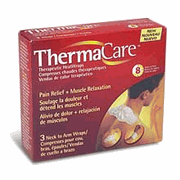
Product Name: ThermaCare Heatwraps
Type: Heat cells with activated charcoal, iron powder, sodium chloride, sodium thiosulfate and water. (Actually produces heat.)
Application: Very easy.
Stickiness: Excellent.
Can you unstick and restick the product? I have re-stuck this product over 3 times and it still held.
Comfort of Patch: Very comfortable if used properly.
Sensation: Heat is generated by the ingredients reacting with air when product is unwrapped. It produces a lot of heat, like a real heating pad, but without the troubles of a wire/plug, or having to reheat it (like the Magic Bag). Very nice, increases circulation, relaxes muscles. This is great during menstrual cramps! Very cool.
Pain Relief: Great for muscle cramps, especially back muscles and abdominal muscles.
Time Active: 8 hours.
Smell: No smell.
Best Area to Apply Patch: Comes in different formats for different body parts (ie back, neck, arm) - all spots are good. However, it gets VERY hot and if you're sensitive, this can hurt. Sensitive places like the neck may get burned, so follow the directions carefully on the package, including the nice insert that comes in each box. I like it on the lower back, between shoulders, and on lower abdomen during menstrual cramps.
Overall thoughts: I love this patch!! It's called a wrap, ok, but I had to include it into this experiment, as I was curious from the commercials . This is an excellent patch and if you can use it - it's a great tool for easing lactic acid buildup that fibrofolks get so easily during workouts. It's a great tool for any woman during her period. It's a great tool for anyone who gets sore muscles. It isn't great for overall fibro electric pain, but great for muscle relaxation - and anyone with any disability, who gets frustrated by the disability or easily gets muscle strains needs to try this patch - of course read the package and consult your doctor!! One note, during one of the tests, I have asthma, my lungs got bothered after using this patch.. but not during all tests. *Update note March 7th: I have had similar irritation to my eyes after having the patch on my neck. I recommend that if this happens to you, remove the patch completely, or transfer it to a body part further from the face. I recommend thighs, calves, lower or mid back.
Update again, in March: more breathing and eye problems when wearing these patches. Keep in mind, I'm a very "allergic" person ;)
Product Name: Icy Hot Patch

Type: Menthol, and a list of other non-med ingredients listed at bottom back of package.
Application: I'm not sure if they have smaller patches, but this pack has HUGE patches that must be cut down. Cut BEFORE you remove the plastic layer!, otherwise you'll have a heck of a time.
Stickiness: Good.
Can you unstick and restick the product? Yes, I've re-stuck this product three times (with each I did at least three re-sticks) and it passed with acceptable limitations. That is, clean the areas you want it to stick to, as with all patches, and make sure there is no moisturizer or other product underneath.
Comfort of Patch: Great. Very bendy.
Sensation: Cold and hot at the same time. Comfortable. Less "gooey" than other patches.
Pain Relief: Great at distracting from mild to moderate pain.
Time Active: Unknown - between 3-6 hours. It depends on what area you apply it to. You will notice it more on the neck for longer, but will stop noticing it on the back after 3 hours. This is great on the wrists, neck, ankles, knees, and upper back - as it is longer than some patches.
Smell: Strong menthol. The "yummiest" menthol smell of the ones I tried, however. ;)
Best Area to Apply Patch: Mentioned under "time active".
Overall thoughts: Good patch. I like it, and I like the fact that it lists all ingredients on its package, for those of us who have strange allergies. I love the smell, it's a very fresh candy-mint smell. It's also very cutable, for areas that require tailored patches (fingers, thumb, upper neck, etc) -and great for making small patches to cover a larger area. (I will talk more about this Dispersal Technique later on in this article.
Product Name: Absorbine Jr. Pain Relieving Patch
Type: Camphor, eucalyptus, menthol.
Application: Easy, good.
Stickiness: Good.
Can you unstick and restick the product? Yes, and the residue from where it was stuck before will continue to deliver pain relief / distraction.
Comfort of Patch: Good. The intensity might be a bit much for some, but I find it effective.
Sensation: Very cold (but not actually cold)
Pain Relief: Good, distraction level is higher than some.
Time Active: Recommended 1-2 hours, but can remain effective longer than that on sensitive areas like the neck.
Smell: Earthy mint smell.
Best Area to Apply Patch: Neck, back.
Overall thoughts: This is noticeably more acute in its cold sensation than other patches, which can be good if you need a good distraction from your pain. It has good stickability and so can be transferred from one place to another if you want, a few times.
Product Name: Deep Cold Pain Patch
Type: "Natural Menthol 4.26%" - (Icy Hot had 5%)
Application: Easy. Points for directing people to cut patches. I like good suggestions and directions.
Stickiness: 6/10
Can you unstick and restick the product? Yes, I would say twice, and thrice it loses adhesive ability.
Comfort of Patch: Good, bendy. But has a "gooey" feel at first, like A535.
Sensation: Cool. Comfortable, gentle.
Pain Relief: Good distraction, like many other patches.
Time Active: Suggested 1-2 hours, however CAN last longer.
Smell: Minty smell, soft.
Best Area to Apply Patch: Neck, back.
Overall thoughts: I like this patch. Whatever other ingredients sets this off from other patches, the difference is slowly noticeable. The effects start off subtly and build up gently.
Product Name: Tensor Heat Therapy
Type: Ingredients react to air, like ThermaCare - it actually creates heat - as illustrated with a heat-vision photo graph montage on the packaging.
Application: Great, easy.
Stickiness: 6/10
Can you unstick and restick the product? Yes, but after the second time it unsticks easily. I use sticky tape to restick it after that.
Comfort of Patch: Good! After a few hours the skin underneath builds up some sweat, so people who don't like that may find it uncomfortable. Unlike the ThermaCare, this breathes less easily (causing that sweating). I LOVE this patch, it feel comfortable to me.
Sensation: Like a sunbeam is hitting that part of your body on which the patch is stuck.
Pain Relief: Great for menstrual cramps, muscles aches, lactic buildup in muscles, strains, tension, etc. A great tool for relaxing muscles and bringing circulation to the affected area.
Time Active: 10 hours!!!!
Smell: None
Best Area to Apply Patch: Back, abdomen, neck - etc,
Overall thoughts: I absolutely love this patch. It's a great tool to relax muscles and increase circulation to the affected area. I have my irregular hell period right now and it's really helping with cramping.
Uses of Pain Patches: How to Add this Tool to your Pain Relieving Arsenal!
I) Precautions
There are different reasons to use these patches:
During my study, (remember, I have fibro and other issues that may be responsible for these findings) I used menthol-based patches on my legs at times, and each time it made my legs hurt more. The pain I used them for was the nervous restless fibro pain, like withdrawal pain. I'm not sure what this means but I will look into it.
IV) Finding the Right Spot
I suggest drawing a map of your body (even if it's a simple stick figure) and test out which spots are helped by patches, and which places to avoid - and mark it down on that "map". Of course you must use common sense. Never put any of these patches on mucus membranes, sexual organs and areas, etc!! Otherwise you're in for an ouch, my friends. It would be useless for me to give you my map, as all bodies are individual when it comes to sensitive spots and numb spots - due to fatty deposits, muscular places, places that have been operated on, burnt, etc. I suffered a bad burn when I was in my teens, and there's NO WAY you should put a patch on irritated, burned, or previously badly burned skin.
V) Carrying a "Distraction" in your Mobile Toolkit
What do I mean by tool kit? Well, I'll let you in on my toolkit so far. With me, where ever I go, I take pill-form meds with me, as well as hand sanitizer (I have a compromised immune system so I err on the side of caution) small cut or folded menthol-based pain patches in a locking plastic bag, a small portion of pain cream (more on pain cream in a future post), a bottle of water with A very small amount of salt in it (dehydration adds to mental fatigue and physical fatigue), a cracker pack (in case I need to take a pill that requires food in the stomach, and so forth. I will post about the toolkit later, but what it is basically is a kit you can take with you that will help you in the case of emergency - but also it can help you go out more often. How? Well sometimes when I'm out and having a pain attack, I have to come back home asap. That can waste time, money, and make one very frustrated, as you may have paid to get to that place (taxi, bus), you might not get out a lot (if you're like me you get out a few times a month at best), and it's nice being out with people and sights to see. A change of vista. The problem with this is that it must be as light as possible, as anyone with pain, weakness, etc - really can't carry a ten pound bag and have a good time.
So that's the great part of pain patches: they are light, compact, bendy (except for some heat patches), and discreet. They fit in the toolkit with ease, and can be applied a the bathroom stall, or in public if it's not hard to get to with dignity.
Disclaimer: I am not a doctor, ask your doctor before using these, read the packaging carefully, and be an informed consumer. I have fibro and may be more sensitive to these patches, and I am not allergic to any of the products I have tested (well not much). This is simply a post on my findings. Also, remember that as you age, your skin gets thinner and therefore is more susceptible to burns and irritation from these patches. A more careful testing period is recommended, but more recommended is that you talk to your doctor. For heating patches, it is recommended that you wear them OVER cloth or clothes in order to minimize possible burns.
Intro
Finally, after a month of testing and documenting, I have an article that I am sure can help sufferers of fibro and fibro-like pain. Pain patches, if you're not allergic to them, should and must be part of your pain-relieving toolkit. I will talk about the rest of the toolkit as I find the tools, but this article is all about pain patches and how they can help YOU!
I have severe pain from Fibro, and if my pain is under 7/10, these patches works wonders. If I have a pain level of 6, it'll bring it down to a 5 or 4/10 through distraction of nerves, as well as the mind. As the nerves feel a strong sensation other than pain (be it menthol or capsacin, etcetera), they focus their attention on the "louder" pain, so as long as your pain isn't intense.. this is a good plan. Some of them also have the added bonus of aromatherapy, or increasing circulation, but enough intro - here's the data I collected. I'm no scientist, so don't laugh at my lack of professionalism here, friends. ;)
Product Name: Rub A535 Dual Action Patch
Type: Menthol-type
Application: Big patches, best to cut them down to a smaller size, otherwise it's hard to keep it from sticking to itself.
Stickiness: 5/10
Can you unstick and restick the product? Not well.
Comfort of Patch: Good, but very "gooey" - which might be off-putting to some users.
Sensation: At first it's cool and wet, then it gets warmer and warmer. The amount of warmth may disturb some users around more sensitive spots (neck for example). Unlike some patches, I always knew it was there, the distraction level from my pain was well worth the extra price you pay with this.
Pain Relief: The sensations are distracting, and if you use the patch properly, this distracting action will trick the brain into feeling less pain.
Time Active: 2.5 - 3.5 hours.
Smell: Menthol (minty)
Best Area to Apply Patch: Back.
Overall thoughts: I like this patch, it can last over three hours and works quite well. The only thing I would say that would be a problem here is if you're allergic (read package before purchase) or if you don't like the "gooey" feeling at first.. It's a little bit more expensive, but the patches are bigger, so if you cut it down, it's a good price as the lesser priced ones are usually smaller and work for less time.
Product Name: Tiger Balm Patch
Type: Menthol, Camphor, demontholised mind oil, eucalyptus oil, and capsacin (bonus marks on the packaging for having the ingredients!!)
Application: VERY sticky, if you get it on your fingers and fingernails, you need to work hard to get it off (as you do NOT want to get any of these pain patches' stuff in your eyes!!!). Good size, and otherwise application is simple if you're paying attention. This is not a patch that you can put on while you're multitasking.
Stickiness: Not bad at all 7/10.
Can you unstick and restick the product? Yes, twice or even three times.
Comfort of Patch: Good, feels nice, doesn't hurt. Breathes well.
Sensation: cold, and then much later it gets warm. On sensitive places it may hurt, as there is capsacin!! It may also leave a red mark under the patch. But, as I will post in future about capsacin: the more you use it, the less it hurts and the more it kills pain. But that doesn't mean you should cover yourself in it and go in shock, silly. Use in moderation, a little tiny bit at a time. You may want to cut capsacin patches in little tiny squares at first, and apply them to your lower back (unless it is already irritated, burned, etc, then you're asking for extreme pain and you need help ;).
Pain Relief: Good distraction from pain. Intense cool is refreshing and calming.
Time Active: 3 hours.
Smell: Strong smell, but the aromatherapy benefits of this product aren't lost on me! It's a calming smell, as well as it gives mental clarity (which fibro people and cfs people need due to exhausted mind), and positivity. Oh, and minty smells curb hunger, which is also good since a good percentage of those with FMS and CFS have overeating disorders connected to pain and mental symptoms (more on that in the future).
Best Area to Apply Patch: Anywhere! If the smell bothers you, you might want to stick the patch below the breastline. Also VERY good for carpal tunnel pain - put it on under your wrist brace(s) and it really stops mid-level pain.
Overall thoughts: Good price, good product. Fair and if you like the smell - wonderful! I like that the package has information, as many of the others didn't have the info for me.
Product Name: Deep Heating Patch
Type: Methyl Salicylate
Application: Easy.
Stickiness: Good, best out of all that I tested. 9/10.
Can you unstick and restick the product? Yes.
Comfort of Patch: *Do not apply to very sensitive areas, as this does have quite a punch to it* - if applied to not-so-sensitive areas (neck fibro points), it's amazingly comfortable. It's VERY bendy.
Sensation: Cold, then VERY warm to hot. If it's on a sensitive place, it might burn and prickle, and leave a bit of a red patch.. so test it!!
Pain Relief: Very good at distracting from pain. Thumbs up.
Time Active: 2-3 hours, however I've just noticed that the pack says no more than 2 hours and no more than twice daily! Let my mistake be a lesson: read the packaging thrice and not just twice ;)
Smell: Strong menthol smell, but I find that nice.
Best Area to Apply Patch: Lower back - it's heavenly there.
Overall thoughts: This patch also earns an A. Why? Well if you use it properly, and test it before you commit to spending a couple of hours with it out of doors (where you can't readily take it off) - you'll love it. What sets this patch apart? Well the intensity of the heat combined with the fact that you can cut it into shape (unlike some other patches I will talk about later) AND it sticks really well. Good combo over all. But again, I warn you: test all patches before going out and being unable to strip it off if it starts to burn.

Product Name: ThermaCare Heatwraps
Type: Heat cells with activated charcoal, iron powder, sodium chloride, sodium thiosulfate and water. (Actually produces heat.)
Application: Very easy.
Stickiness: Excellent.
Can you unstick and restick the product? I have re-stuck this product over 3 times and it still held.
Comfort of Patch: Very comfortable if used properly.
Sensation: Heat is generated by the ingredients reacting with air when product is unwrapped. It produces a lot of heat, like a real heating pad, but without the troubles of a wire/plug, or having to reheat it (like the Magic Bag). Very nice, increases circulation, relaxes muscles. This is great during menstrual cramps! Very cool.
Pain Relief: Great for muscle cramps, especially back muscles and abdominal muscles.
Time Active: 8 hours.
Smell: No smell.
Best Area to Apply Patch: Comes in different formats for different body parts (ie back, neck, arm) - all spots are good. However, it gets VERY hot and if you're sensitive, this can hurt. Sensitive places like the neck may get burned, so follow the directions carefully on the package, including the nice insert that comes in each box. I like it on the lower back, between shoulders, and on lower abdomen during menstrual cramps.
Overall thoughts: I love this patch!! It's called a wrap, ok, but I had to include it into this experiment, as I was curious from the commercials . This is an excellent patch and if you can use it - it's a great tool for easing lactic acid buildup that fibrofolks get so easily during workouts. It's a great tool for any woman during her period. It's a great tool for anyone who gets sore muscles. It isn't great for overall fibro electric pain, but great for muscle relaxation - and anyone with any disability, who gets frustrated by the disability or easily gets muscle strains needs to try this patch - of course read the package and consult your doctor!! One note, during one of the tests, I have asthma, my lungs got bothered after using this patch.. but not during all tests. *Update note March 7th: I have had similar irritation to my eyes after having the patch on my neck. I recommend that if this happens to you, remove the patch completely, or transfer it to a body part further from the face. I recommend thighs, calves, lower or mid back.
Update again, in March: more breathing and eye problems when wearing these patches. Keep in mind, I'm a very "allergic" person ;)
Product Name: Icy Hot Patch

Type: Menthol, and a list of other non-med ingredients listed at bottom back of package.
Application: I'm not sure if they have smaller patches, but this pack has HUGE patches that must be cut down. Cut BEFORE you remove the plastic layer!, otherwise you'll have a heck of a time.
Stickiness: Good.
Can you unstick and restick the product? Yes, I've re-stuck this product three times (with each I did at least three re-sticks) and it passed with acceptable limitations. That is, clean the areas you want it to stick to, as with all patches, and make sure there is no moisturizer or other product underneath.
Comfort of Patch: Great. Very bendy.
Sensation: Cold and hot at the same time. Comfortable. Less "gooey" than other patches.
Pain Relief: Great at distracting from mild to moderate pain.
Time Active: Unknown - between 3-6 hours. It depends on what area you apply it to. You will notice it more on the neck for longer, but will stop noticing it on the back after 3 hours. This is great on the wrists, neck, ankles, knees, and upper back - as it is longer than some patches.
Smell: Strong menthol. The "yummiest" menthol smell of the ones I tried, however. ;)
Best Area to Apply Patch: Mentioned under "time active".
Overall thoughts: Good patch. I like it, and I like the fact that it lists all ingredients on its package, for those of us who have strange allergies. I love the smell, it's a very fresh candy-mint smell. It's also very cutable, for areas that require tailored patches (fingers, thumb, upper neck, etc) -and great for making small patches to cover a larger area. (I will talk more about this Dispersal Technique later on in this article.
Product Name: Absorbine Jr. Pain Relieving Patch
Type: Camphor, eucalyptus, menthol.
Application: Easy, good.
Stickiness: Good.
Can you unstick and restick the product? Yes, and the residue from where it was stuck before will continue to deliver pain relief / distraction.
Comfort of Patch: Good. The intensity might be a bit much for some, but I find it effective.
Sensation: Very cold (but not actually cold)
Pain Relief: Good, distraction level is higher than some.
Time Active: Recommended 1-2 hours, but can remain effective longer than that on sensitive areas like the neck.
Smell: Earthy mint smell.
Best Area to Apply Patch: Neck, back.
Overall thoughts: This is noticeably more acute in its cold sensation than other patches, which can be good if you need a good distraction from your pain. It has good stickability and so can be transferred from one place to another if you want, a few times.
Product Name: Deep Cold Pain Patch
Type: "Natural Menthol 4.26%" - (Icy Hot had 5%)
Application: Easy. Points for directing people to cut patches. I like good suggestions and directions.
Stickiness: 6/10
Can you unstick and restick the product? Yes, I would say twice, and thrice it loses adhesive ability.
Comfort of Patch: Good, bendy. But has a "gooey" feel at first, like A535.
Sensation: Cool. Comfortable, gentle.
Pain Relief: Good distraction, like many other patches.
Time Active: Suggested 1-2 hours, however CAN last longer.
Smell: Minty smell, soft.
Best Area to Apply Patch: Neck, back.
Overall thoughts: I like this patch. Whatever other ingredients sets this off from other patches, the difference is slowly noticeable. The effects start off subtly and build up gently.
Product Name: Tensor Heat Therapy
Type: Ingredients react to air, like ThermaCare - it actually creates heat - as illustrated with a heat-vision photo graph montage on the packaging.
Application: Great, easy.
Stickiness: 6/10
Can you unstick and restick the product? Yes, but after the second time it unsticks easily. I use sticky tape to restick it after that.
Comfort of Patch: Good! After a few hours the skin underneath builds up some sweat, so people who don't like that may find it uncomfortable. Unlike the ThermaCare, this breathes less easily (causing that sweating). I LOVE this patch, it feel comfortable to me.
Sensation: Like a sunbeam is hitting that part of your body on which the patch is stuck.
Pain Relief: Great for menstrual cramps, muscles aches, lactic buildup in muscles, strains, tension, etc. A great tool for relaxing muscles and bringing circulation to the affected area.
Time Active: 10 hours!!!!
Smell: None
Best Area to Apply Patch: Back, abdomen, neck - etc,
Overall thoughts: I absolutely love this patch. It's a great tool to relax muscles and increase circulation to the affected area. I have my irregular hell period right now and it's really helping with cramping.
Uses of Pain Patches: How to Add this Tool to your Pain Relieving Arsenal!
I) Precautions
- First, make sure you're not allergic to the patches.
- Next, make sure it doesn't interact with any topical medication you're using (or ingested otherwise).
- Test the product on your arm for a short time, then a longer time, and frequently check for burns or other reactions.
- Read the packaging twice or thrice - better safer than sorry.
There are different reasons to use these patches:
- Distraction from Pain
- This will mostly work on mild to moderate pain. During a 7/10+ pain attack, it may not do much of anything.
- It's not a substitute for pain meds your doctor prescribes, but can be used WITH the pain medication.
- Be an informed consumer, be wise, listen to your doctor, your brain, and your gut. If you don't like the product, there are other products that can help you.
- Also, make sure you're not allergic to the product, because then you'll have a negative pain distraction!
- Try out different patches for yourself. Everyone is different, and what distracts me - may highlight someone else's pain. You may react differently.
- Increasing Circulation and Heat
- Cold muscles can add dramatically to fibro pain and other pain disorders - so these warming (ThermaCare and Tensor) patches will help this. Use on cold days, or on cold places (as people with circulation disorders can have cold body parts regardless of Summer/Winter temperatures), and it will heat up the part for 8-10 hours!
- I have found that the extra circulation helps with the healing process on strained muscles. People with impaired healing (due to lack of proper sleep, immune system dysfunction, etc) might find that their muscles heal a bit faster, and with less fuss. I certainly was impressed, although don't expect miracles, friends, stay realistic!
- Menthol based patches might FEEL hot, but I doubt they actually get hot. Or if they do, it's probably due to the patch trapping body heat in? Anyways, the air-activated ingredients in the ThermaCare and Tensor patches actually generate heat. I hate to repeat, but I want to get the point across. THEY ARE AWESOME!
- Relaxing Tension
- With pain disorders, and any disability really, frustration commonly breeds without proper outlet, and muscles tense up. We all have our bad spots: tense shoulders, achey lower back from tension postures, neck pain, etc. Heating patches and even the menthol-based patches can aid in relaxation of these muscles. Either heating the muscles, aromatherapy, distracting soothing menthol patch sensation, etc, these things will all lower tension in the body, mind, and soul.
During my study, (remember, I have fibro and other issues that may be responsible for these findings) I used menthol-based patches on my legs at times, and each time it made my legs hurt more. The pain I used them for was the nervous restless fibro pain, like withdrawal pain. I'm not sure what this means but I will look into it.
IV) Finding the Right Spot
I suggest drawing a map of your body (even if it's a simple stick figure) and test out which spots are helped by patches, and which places to avoid - and mark it down on that "map". Of course you must use common sense. Never put any of these patches on mucus membranes, sexual organs and areas, etc!! Otherwise you're in for an ouch, my friends. It would be useless for me to give you my map, as all bodies are individual when it comes to sensitive spots and numb spots - due to fatty deposits, muscular places, places that have been operated on, burnt, etc. I suffered a bad burn when I was in my teens, and there's NO WAY you should put a patch on irritated, burned, or previously badly burned skin.
V) Carrying a "Distraction" in your Mobile Toolkit
What do I mean by tool kit? Well, I'll let you in on my toolkit so far. With me, where ever I go, I take pill-form meds with me, as well as hand sanitizer (I have a compromised immune system so I err on the side of caution) small cut or folded menthol-based pain patches in a locking plastic bag, a small portion of pain cream (more on pain cream in a future post), a bottle of water with A very small amount of salt in it (dehydration adds to mental fatigue and physical fatigue), a cracker pack (in case I need to take a pill that requires food in the stomach, and so forth. I will post about the toolkit later, but what it is basically is a kit you can take with you that will help you in the case of emergency - but also it can help you go out more often. How? Well sometimes when I'm out and having a pain attack, I have to come back home asap. That can waste time, money, and make one very frustrated, as you may have paid to get to that place (taxi, bus), you might not get out a lot (if you're like me you get out a few times a month at best), and it's nice being out with people and sights to see. A change of vista. The problem with this is that it must be as light as possible, as anyone with pain, weakness, etc - really can't carry a ten pound bag and have a good time.
So that's the great part of pain patches: they are light, compact, bendy (except for some heat patches), and discreet. They fit in the toolkit with ease, and can be applied a the bathroom stall, or in public if it's not hard to get to with dignity.
o{---Progressive Muscle Relaxation---}o
Here is a quick exercise I'd like to share with you today, as I am sharing it with friends, family, etc - in order to promote this meditation that has helped me much in the past and present. Today is elections day in Canada, so all Canadians in stress/pain: this is dedicated to you :)
(I suggest you do this while listening to calming music, like SomaFM Radio's Drone Zone, or Radio Tabla):
(I suggest you do this while listening to calming music, like SomaFM Radio's Drone Zone, or Radio Tabla):
- Lay down with a pillow under your head and another one under your knees (optional, but it's more comfortable)
- Breathe in slowly through your nose for a count of 6, and out through your pursed lips (like you're whistling, but without sound) for a count of 15. Get used to this breathing for a few minutes before you continue to the next step. (This is easy to memorize, but you can also copy and paste this into a word document and print it out if you wish.)
- Think of each muscle from your toes to your nose, tense them all up for that inward respiration (6 seconds or count to 6) but tense them up only once, and then relax them all slowly for a count of 15. Another option for this is going through each muscle at a time from toes to face, each breath cycle being one more group. The optional method is more effective, but it takes a lot longer, of course depending on how down to detail you get. I suggest you can also just focus on muscle groups: leg muscles, abdominal, arms, neck and shoulders, and face.
- Continue breathing, and feel like your body is slowly melting into the carpet, like a marshmallow in the microwave or snow under a warm joyful sun.. This should relax you plenty. Do this for 15 minutes to an hour (or more!), and your body will release plenty of happy endorphins.

For some free Audio Meditation Lessons, click here
Improving Sleep Guide
Sleep is the Holy Grail for many of us, not just those with CFS/FMS.. and so here I have compiled a list of things to do, and not to do, to improve your sleep. This isn't sleep 101 - but more an article on getting you on the right track to better sleep. Be patient with these methods, and as always - I'm not a doctor, so consult your doctor before you try anything! (this article focuses on Behavioral Sleep Therapy, a proven method when dealing with fibro and CFS)
I will add to this post whenever I find something of use for you!
The Ellusive Delta Wave Sleep
For people with chronic fatigue and fibromyalgia, as well as other disorders, the level of restorative sleep - aka Delta Wave sleep, Stage Four sleep, Slow Wave Sleep - elludes us. This means less restorative growth hormones to our damaged tissues, which in turn causes pain, weakness, poor muscle tone, aches, etc. This is a viscious cycle that leads us to hallucinations, irritability, perpetual grogginess, bla bla bla, I don't want to depress you with the details - let's just say it's bad and we all need to focus on getting it better. Keep it simple, and it's less daunting! Let's call this mountain a mole-hill, and start climbing it!
 Behavioral Conditioning: Good Dog, Bad Dog
Sleep conditioning can be likened to training a dog or a child how to do something - you have to have plenty of patience, you have to repeat until understood, you have to correct at everytiny step, and you have to reward, affirm, and add plenty of love. If you're not going to put love into this, then you have to work on that first, as frustration will build a bad foundation for this sleep therapy.
So let's go through some tried and tested laws of getting better sleep first. These may be very difficult at first, but after a month or so - you will get the hang of it, and will notice your sleep improving. I have gone through the training and can tell you that it does work, however with every case of FMS/CFS things can be different. The first few days or even weeks, you may fall asleep all the time, or be very grumpy, irritable, depressed, paranoid, forgetful, etc etc (if you have CFS/FMS, chances are you know what I'm talking about)... so make sure it's not during an extra-stressful time that you start this. You should start seeing improvements in your energy level after about 2 weeks to a month. Whenever you want to fall asleep, it's important that you not, as naps for fibro can make night time sleeping more fragmented than it already is - as well as more shallow than it already is. Tips on how not to fall asleep will come later on in this post!!
Remember: trying this method will not only help you be in control of your situation (in fibro and other illnesses, feeling in control is a great thing), but you can also know you tried and know you did you best. And in this kind of battle, that can create more self-confidence, bravery, and optimism. So give it your best, my friends, and try-try-try!
The Bed
Tips on Following Through with the Sleep Behavioral Therapy:
How not to Fall Asleep:
During your sleep therapy, after a few days, it's important to start tweaking. What this means is to adjust your schedule to fit your individual needs. That is, add 15-30 minutes to your sleep schedule. Try to add this in the morning, not going to sleep earlier - as that can cause more problems. Waking up in the morning 15-30 minutes later is safer tweaking, and can leave you feeling more refreshed. If you need a bit more time, then do it! Keep working within reasonable confines (try not to sleep 22 hours a day, you're not a Koala!!) of common sense. Give each alteration (tweak) at least a few days to set in before you make up your mind if it's better or not. You can do this with other parts of your schedule, like cut-off times for certain activities (like computer time).
How to Keep Motivated:
It is important during this time to know why you are trying to improve your sleep. Get a journal, online weblog, or just grab a piece of paper - or use your mind if you have a good memory: and write down what sleep means to you! Write down what it means to you physically, emotionally, intellectually, and spiritually. For example:
This isn't a competition, so you're not losing a game... you're winning each time you have the guts to dust yourself off and start again. Kudos to you! You are a real hero!
How to Document Progress:
Just like the previous section, get a notebook, blog, paper, etc - and every day, write down what time you went asleep (which should be the same every day) and what time you went to sleep (which should be roughly the same time every day) - whether or not you were forced into a nap, whether or not you lost emotional composure.. write down your feelings about the program. More importantly, write down how much energy you had that day. The journal entry can look something like this (ignore the times tho, since everyone has their own schedule:
Wake time: 7:00 am
Energy level: Okay in the morning, poor at night
Emotions: Mostly happy, but felt very frustrated by my fatigue again.
Physical symptoms of sleep deprivation: Loss of concentration was the main symptom today.
Went to sleep at: 10:00pm (it's good to write this right before you go to bed, or first thing the next morning if that's not an option)
Links for Your Further Study and
Sources of Information for this Article:
The Fibromyalgia Handbook, by Harris H McIlwain, M.d. and Debra Fulghum Bruce, Owl Books/Henry Holt & Company, (3 Editions, 1996, 1999, 2003).
Fibromyalgia for Dummies by Roland Staud, M.d., Christine Adamec.
Article online at Fibromyalgia Symptoms
5-HTP and L-Tryptophan is an article about the usefulness of this Serotonin Precursor (by increasing your intake of the amino acid Tryptophan (most popularly known to be found in Turkey, but is found in a a large variety of foods in different amounts). I highly recommend you look into this substance.
LifeTips.Com: Sleeping Disorders Tips is a neat place to get tips, make sure to check the related categories on the lefthand menu bar.
Talk About Sleep is a great site where you can find more information about sleep disorders, sleep tests, sleep doctors, you can chat with others about sleep disorders - find out about sleep meds, treatments, etc. Definitely check this out.
About.Com's Chronic Fatigue Insomnia Tips
SleepNet's Tips for Better Sleep
National Pain Foundation: Dealing with Insomnia and Other Sleep Disorders
Mother Nature.com: Insomnia has useful information natural medicines to combat insomnia, you can also purchase the herbs etc from here.
I will add to this post whenever I find something of use for you!
The Ellusive Delta Wave Sleep
For people with chronic fatigue and fibromyalgia, as well as other disorders, the level of restorative sleep - aka Delta Wave sleep, Stage Four sleep, Slow Wave Sleep - elludes us. This means less restorative growth hormones to our damaged tissues, which in turn causes pain, weakness, poor muscle tone, aches, etc. This is a viscious cycle that leads us to hallucinations, irritability, perpetual grogginess, bla bla bla, I don't want to depress you with the details - let's just say it's bad and we all need to focus on getting it better. Keep it simple, and it's less daunting! Let's call this mountain a mole-hill, and start climbing it!
 Behavioral Conditioning: Good Dog, Bad Dog
Sleep conditioning can be likened to training a dog or a child how to do something - you have to have plenty of patience, you have to repeat until understood, you have to correct at everytiny step, and you have to reward, affirm, and add plenty of love. If you're not going to put love into this, then you have to work on that first, as frustration will build a bad foundation for this sleep therapy.
So let's go through some tried and tested laws of getting better sleep first. These may be very difficult at first, but after a month or so - you will get the hang of it, and will notice your sleep improving. I have gone through the training and can tell you that it does work, however with every case of FMS/CFS things can be different. The first few days or even weeks, you may fall asleep all the time, or be very grumpy, irritable, depressed, paranoid, forgetful, etc etc (if you have CFS/FMS, chances are you know what I'm talking about)... so make sure it's not during an extra-stressful time that you start this. You should start seeing improvements in your energy level after about 2 weeks to a month. Whenever you want to fall asleep, it's important that you not, as naps for fibro can make night time sleeping more fragmented than it already is - as well as more shallow than it already is. Tips on how not to fall asleep will come later on in this post!!
Remember: trying this method will not only help you be in control of your situation (in fibro and other illnesses, feeling in control is a great thing), but you can also know you tried and know you did you best. And in this kind of battle, that can create more self-confidence, bravery, and optimism. So give it your best, my friends, and try-try-try!
The Bed
- Your bed is only for sleeping! No talking on the phone, no yoga on the bed, no working on your laptop or whatever - the bed is for sleeping. Some books say you can use it for sex too.
- The bed must be comfortable. If you have extra money to save, buy the sweetest bed you can, you know - a pocket coil bed or that super NASA foam-bed. Try out lots of beds at the store and then start saving, or if you're lucky enough: purchase it right away!
- The pillow must be comfortable. I have one of those NASA foam form-fitting pillows, very comfy. They range from 30$ - 150$, and are well worth it. Try them out at the store first.
- Mattresses and Pillows have a limited lifetime, so you'll have to replace them once in a long while. Mattresses should be rotated and flipped (ask the store clerk or consult the maker for rotation and flip suggested time periods).
- Bedding shouldn't make you too hot, overheating has been proven to cheat humans of sleep - however, a chilled room will not interfere with sleep. As long as it's not cold enough to freeze you! Hehe. The bedding also shouldn't cause you any discomfort.
- Make sure your bed is clean. I know that cleaning can be difficult for us, so if you're disabled enough - you can buy more than two sets of sheets and when one is dirty - ask a friend or family member to wash them for you when they have time. Otherwise, rotate the sheets and wash the dirty pile when you are more able.
- A calm, peaceful atmosphere should describe your bedroom. If possible, remove any computers, tvs, and other sources of stimulus from your bedroom.
- Make sure you are able to make the room completely dark for your bedtime hours.
- Make sure you are able to make the room quiet for your bedtime hours, use ear plugs, or if you have the resources - find a way to deaden the sound in the room itself (applying certain materials to the walls can cut down drastically on sounds, etc).
- Wake up at the same time every day (as close to it as possible)
- Go to sleep at the same time every day (as close to it as possible)
- Exercise each day (as much as is possible without endangering yourself a flare up or worse, even if it's just 5 minutes a day of exercise, do what you can!) at the same time each day, if possible. The body loves a schedule.
- No napping, if possible. Napping can be very dangerous to your sleep cycle and can make your night time sleeping fragmented and shallow.
- Try to get some light in the day time, and try to keep things darker in the night time.
- Do not exercise after supper.
- Do not eat supper too late.
- Try to eat meals at the same time (roughly, if possible) each day.
- Set a cut-off time for exciting activities in the evening. I cut my exciting activities at 8:00pm.. After this time, nothing exciting or overstimulating. It's hard to get the hang of, but a lot less insomnia happens. This gives your body time to wind down.
- Try not to get too hot before bed time.
- Try to write out a to-do list and any thoughts that you have that seem to be cycling.. allot a certain time for this. I do it every night an hour before I go to sleep, and I allot 20 minutes. Anything I forget, I make a rule to say: if it's meant to be, it'll come automatically. In other words, instead of sitting in bed thinking of all the things you have to do, write it down so you can get to sleep much more easily. Journalling at this time is also suggested.
- No alcohol
- No stimulants: coffee, cigarets, etc.
- No eating late, if you are hungry (hunger can make it harder to sleep), you should eat a light complex carbohydrate-rich snack.
- No drinking tall glasses of water before you go to sleep.
- No arguments before bed - concede defeat if it means a better night's sleep. Set a cut-off time.
- No computer late, try to be de-computerized at least four hours before you go to bed. The bright screen and activity can make your internal clock go haywire. Set a cut-off time.
- No exciting books or movies before bed. Set a cut-off time.
- No worrying about insomnia!! That actually causes insomnia. Just follow the steps and let your body assume everything will work out fine.
Tips on Following Through with the Sleep Behavioral Therapy:How not to Fall Asleep:
- When you feel yourself about to doze off:
- Stand up and reach for the ceiling, then let both arms slowly and gracefully fall to your sides. Repeat this three or four times (or more), depending on how bad your arm pain/fatigue is.
- Here are some Yoga poses that release energy but don't require too much energy to do - click on the name to see pictures of the pose:
- The Cobra
- The Cat
- The Cow Faced Post
- The Fish (be careful to put a soft pillow under your neck if you have a weak neck. Some people with fibro find this really good for relieving pressure on the tender points of the neck and shoulders)
- The Half Spinal Twist (or if you're a student of Yoga, try a variety of twists)
- The Lion (very good for relieving tension for those with TMJ, but with anything on this blog, please consult your doctor)
- Learn Tai Chi or QiGong, as both of them are gentle, but release trapped physical energy. Sounds silly? Well it works, whether it sounds silly or not! And neither of them require that much exertion, and you can stop whenever you get too tired, too much pain, or any other wrong discomfort. For those of us with Fibro, everything can be uncomfortable, but some things are less painful/uncomfortable than others.
- Tai Chi is a "soft" martial art that uses slow and gentle movements of the body in a long pattern. It usually takes about a year to learn properly, and there are many good teachers and books out there. This increases circulation, releasing energy and also helping you get fitter.
- QiGong is a very gentle body-posture exercise that uses the principal of Chi - just like Tai Chi, but is even less physically demanding for some. The static postures can sometimes tax muscles that have little or no stamina - but do only as much as you can. Just like Tai Chi, this helps circulation and this releases energy.
- Drink water - as water can release energy by halting dehydration, which by itself can cause fatigue. Keeping well hydrated during the training phase (and every day of your life) is very important, and will keep you awake more.
- Smell peppermint! This smell sharpens the mind and can keep you awake a bit more.
- Get up and do something else: talk on the phone, read a book (but not a boring one, make it as exciting as possible), etc.
- Turn on the lights! To keep awake, get into a bright room, as dark rooms are conducive to sleep!
During your sleep therapy, after a few days, it's important to start tweaking. What this means is to adjust your schedule to fit your individual needs. That is, add 15-30 minutes to your sleep schedule. Try to add this in the morning, not going to sleep earlier - as that can cause more problems. Waking up in the morning 15-30 minutes later is safer tweaking, and can leave you feeling more refreshed. If you need a bit more time, then do it! Keep working within reasonable confines (try not to sleep 22 hours a day, you're not a Koala!!) of common sense. Give each alteration (tweak) at least a few days to set in before you make up your mind if it's better or not. You can do this with other parts of your schedule, like cut-off times for certain activities (like computer time).
How to Keep Motivated:
It is important during this time to know why you are trying to improve your sleep. Get a journal, online weblog, or just grab a piece of paper - or use your mind if you have a good memory: and write down what sleep means to you! Write down what it means to you physically, emotionally, intellectually, and spiritually. For example:
- Physically, better sleep to me means healing. It would mean that I would have more energy and feel less sluggish. Even if I don't feel like a million bucks, feeling even a little better would mean that I could do more - and that include do more to get even better!
- Emotionally, better sleep would mean that I wouldn't be as grumpy, angry, frustrated, or moody!
- Intellectually, better sleep would mean my memory and mind in general would be sharper. I could be more confident by having people correct me less often for mistakes in grammar and turning whole sentences around. I would be able to think more clearly and devise more ways to get better!
- Spiritually, better sleep would mean that I could be more motivated on my path to better health, I could be more compassionate and become more of an enlightened person without so many days of utter fatigue.
* * I t ' s o k a y ! ! ! * *
Don't you dare be hard on yourself during this time! It's okay if you have a bad day and you need to nap! We aren't robots. The whole point of behavioral training is to get yourself into the groove of the thing you're trying to learn. The more you follow your new rules, the more your body will tame itself, but with fibro, it'll always be somewhat unruly. You will, in all probability, have to start this therapy over and over again, because of flare-ups. During flare-ups, your body can fall asleep on its own, and fall into shallow sleep and leave you even more tired when you wake up - so this treatment won't be for you during your worst possible days. Don't stress out over it! Just know it's normal for fibro, it's a cycle, and you have to learn, like most people with fibro, perfectionism is bad! Get back up gently after a flare-up and start all over again, and each time you will make more progress. This isn't a competition, so you're not losing a game... you're winning each time you have the guts to dust yourself off and start again. Kudos to you! You are a real hero!
How to Document Progress:
Just like the previous section, get a notebook, blog, paper, etc - and every day, write down what time you went asleep (which should be the same every day) and what time you went to sleep (which should be roughly the same time every day) - whether or not you were forced into a nap, whether or not you lost emotional composure.. write down your feelings about the program. More importantly, write down how much energy you had that day. The journal entry can look something like this (ignore the times tho, since everyone has their own schedule:
Wake time: 7:00 am
Energy level: Okay in the morning, poor at night
Emotions: Mostly happy, but felt very frustrated by my fatigue again.
Physical symptoms of sleep deprivation: Loss of concentration was the main symptom today.
Went to sleep at: 10:00pm (it's good to write this right before you go to bed, or first thing the next morning if that's not an option)
Links for Your Further Study and
Sources of Information for this Article:
The Fibromyalgia Handbook, by Harris H McIlwain, M.d. and Debra Fulghum Bruce, Owl Books/Henry Holt & Company, (3 Editions, 1996, 1999, 2003).
Fibromyalgia for Dummies by Roland Staud, M.d., Christine Adamec.
Article online at Fibromyalgia Symptoms
5-HTP and L-Tryptophan is an article about the usefulness of this Serotonin Precursor (by increasing your intake of the amino acid Tryptophan (most popularly known to be found in Turkey, but is found in a a large variety of foods in different amounts). I highly recommend you look into this substance.
LifeTips.Com: Sleeping Disorders Tips is a neat place to get tips, make sure to check the related categories on the lefthand menu bar.
Talk About Sleep is a great site where you can find more information about sleep disorders, sleep tests, sleep doctors, you can chat with others about sleep disorders - find out about sleep meds, treatments, etc. Definitely check this out.
About.Com's Chronic Fatigue Insomnia Tips
SleepNet's Tips for Better Sleep
National Pain Foundation: Dealing with Insomnia and Other Sleep Disorders
Mother Nature.com: Insomnia has useful information natural medicines to combat insomnia, you can also purchase the herbs etc from here.
Subscribe to:
Posts (Atom)